Every business juggles a mix of expenses, from wages to equipment. Capital Expenditure (CapEx) drives long-term value, covering significant investments made to expand or upgrade assets. Operating Expenditure (OpEx), in contrast, includes the essential, day-to-day costs of running a business that keep the wheels turning no matter the financial climate.
For finance teams, understanding the distinction between CapEx and OpEx is critical. A misstep in categorising these expenses could lead to tax complications, statutory reporting failures, budgeting inefficiencies, or cash flow problems.
But when managed strategically with tools like Pulse Financials, they can help optimise spending, improve forecasting, and maximise performance.
In this guide, we’ll break down CapEx vs OpEx in detail—what each includes, how they impact financial planning, and how to develop a spending strategy that aligns with your business goals. Let’s get started.
What is CapEx?
Capital expenditures (CapEx) refer to large, often one-time investments made to acquire, upgrade, or extend the life of long-term assets. These expenses are essential for fuelling future growth, capacity and productivity.
Think of CapEx as the foundation that supports a company’s expansion and sustainability. It’s designed to deliver value for years, improving efficiency and potentially increasing revenue.
Common examples of CapEx include:
- Physical assets such as real estate, machinery, vehicles, and equipment
- Construction or renovation of buildings
- Technology upgrades, including new software and infrastructure
- Research and development investments
- Acquisition of intangible assets like patents or trademarks
As CapEx is tied to long-term assets, it’s not fully expensed in the year of purchase. Instead, these costs are capitalised on the balance sheet and gradually depreciated over time.
This approach helps businesses manage cash flow by spreading the financial impact over the asset’s useful life rather than absorbing a large expense all at once.
What is OpEx?
Operating Expenditure(OpEx) is the everyday costs a business incurs through normal operations. These regular, ongoing expenses cover essentials like rent, utilities, office supplies, employee wages, and software subscriptions.
Unlike CapEx, these short-term operational costs sustain current business activities but don’t directly contribute to future growth or asset acquisition.
OpEx appears on the company’s income statement. Most of these expenses can be deducted in the year they occur, reducing taxable income.
By effectively managing OpEx, your business can optimise cash flow, improve budgeting, and maintain financial stability for smooth day-to-day operations.
CapEx vs OpEx: 5 key differences
Type of investment
CapEx shapes the long-term direction of a company, while OpEx fuels everyday operations.
Think of CapEx as building for the future—major investments designed to strengthen your business over time. For many businesses, CapEx spending happens in bursts, when a company expands, upgrades outdated equipment, or takes advantage of a new opportunity.
OpEx, however, is the steady rhythm of business operations, covering the essentials that keep everything running.
Calculations
Understanding how to crunch the numbers for CapEx and OpEx is essential for managing business finances effectively.
Let’s break down how CapEx vs OpEx is calculated.
To determine your CapEx for a given period, use the following formula:
CapEx = (PP&E from the previous period – PP&E from the current period) + Depreciation
PP&E (Property, Plant, and Equipment) represents the value of tangible assets a company owns, while depreciation accounts for the gradual reduction in the value of these assets over time.
For example, if a company had a balance of $500,000 in PP&E this year, $450,000 last year, and recorded $80,000 in depreciation, the CapEx would be:
($500,000 – $450,000) + $80,000 = $130,000
This means the business spent $130,000 on acquiring or upgrading its long-term assets.
Meanwhile, the formula for OpEx is:
OpEx = Cost of Goods Sold (COGS) + Operating Expenses
COGS refers to all costs directly related to producing goods or services, while operating expenses cover everything else needed to sustain daily business functions.
Let’s say a bakery spends $40,000 on ingredients, packaging, and production costs (COGS), plus an additional $25,000 on rent, salaries, and marketing expenses. The OpEx for that period would be:
$40,000 + $25,000 = $65,000
Impact on cash flow
Both CapEx and OpEx play a crucial role in a company’s cash flow but in very different ways.
CapEx projects often come with a high upfront cost, whether it’s buying new equipment, expanding facilities, or upgrading infrastructure.
Once a CapEx decision is made, it’s tough to reverse. If an investment doesn’t generate the expected return, the financial consequences can last for years.
Meanwhile, OpEx has a more immediate and consistent impact on cash flow. If operating costs suddenly rise—like an unexpected surge in energy bills—you can adjust spending or activity in the following month to compensate.
Long story short: While CapEx investments require careful planning and long-term commitment, OpEx tends to be more predictable and easier to manage month-to-month.
Striking the right balance between the two is key to maintaining healthy cash flow, financial stability, and sustainable growth.
Accounting treatment
How CapEx and OpEx appear in financial statements differs significantly.
OpEx is directly deducted from revenue to determine profit, meaning the higher your operating costs, the more revenue you need to stay in the black.
CapEx, on the other hand, is recorded as assets on the balance sheet and gradually depreciates over time. The level of debt incurred to purchase these assets is the driving factor to the impact they have on the balance sheet.
Let’s take a closer look at how they influence key financial statements.
Income statement
Unlike OpEx, CapEx doesn’t hit the income statement all at once. It’s broken down into smaller depreciation costs over time, spreading out the financial impact and smoothing fluctuations in profit. This method ensures that large investments don’t cause massive swings in financial performance.
Balance sheet
While OpEx disappears from the books after each accounting period, CapEx leaves a lasting mark on the balance sheet. These purchases are listed as assets that contribute to the company’s overall net worth.
Over time, depreciation reduces the value of these assets, reflecting the wear and tear or obsolescence that naturally occurs.
However, since these investments typically fuel efficiency, expansion, or innovation, they are key indicators of a company’s long-term strategy.
Cash flow statements
OpEx and CapEx appear in different sections of the cash flow statement.
CapEx is recorded in the investing activities section, as they’re expected to contribute to future earnings. OpEx shows up under operating activities, directly impacting net cash flow each month.
Another key factor in the cash flow equation is depreciation. While it reduces reported earnings on the income statement, it doesn’t actually involve cash leaving the business.
Because of this, depreciation is added back when calculating cash flow, offering a clearer picture of a company’s liquidity.
The Operating Cash Flow formula shows how operating activities—like OpEx and depreciation— feed into a business’s real-time cash position, beyond just what’s reported as profit:
Operating Cash Flow = Net Income + Non-Cash Expenses + Changes in Working Capital
Essentially, it adjusts net income by adding back non-cash charges like depreciation and factoring in shifts in working capital (such as changes in inventory, receivables, and payables). This gives a more accurate sense of financial health than profit figures alone.
Tax deductions
When it comes to tax treatment, there are distinct rules for CapEx vs OpEx—namely, how and when you can deduct them from your taxable income.
As CapEx assets are built to last, the tax deduction doesn’t happen all at once. Instead, the cost is spread out over multiple years through depreciation, letting businesses claim smaller tax deductions each year rather than a lump sum in the year of purchase.
OpEx, on the other hand, is all about instant impact. These everyday business costs are typically fully deductible in the year they’re incurred. That means businesses can immediately subtract these expenses from their taxable income, reducing their tax burden in real-time rather than waiting years for the financial benefit.
The trade-off?
CapEx provides long-term value but delays full tax benefits, while OpEx hits the books right away but doesn’t contribute to future asset growth.
Please note: This is not intended as financial advice. Tax laws can be tricky and vary depending on your location and business structure. Always check with a tax professional to make sure you’re making the most suitable financial decision for your circumstances.
Should you use CapEx and OpEx?
Every business needs both CapEx and OpEx, but the choice between them depends on your financial goals, risk tolerance, and operational flexibility.
CapEx is about investing in long-term stability and asset ownership, while OpEx prioritises flexibility and lower upfront costs.
Most companies find a balance between the two—investing in critical assets through CapEx while leveraging OpEx for scalable and on-demand services.
Let’s explore the pros and cons of each.
CapEx advantages
- Building long-term value – Investing in physical assets like property, vehicles, and technology enhances productivity and supports sustained growth. These assets can increase revenue potential by expanding operational capacity and improving efficiency.
- Boosting efficiency and performance – Newer, more advanced equipment can streamline operations, reduce downtime, and lower maintenance costs. Over time, this can significantly improve profit margins.
- Competitive positioning – Businesses that consistently invest in their infrastructure can stay ahead of competitors by offering better products, services, or experiences to their customers.
- Tax benefits through depreciation – Instead of deducting the full cost upfront, businesses can spread out deductions over several years, reducing taxable income gradually.
CapEx disadvantages
- Reduced flexibility – Large capital investments lock businesses into long-term commitments, making it harder to pivot when technology or market conditions change.
- Vendor dependency – Purchasing hardware or proprietary systems ties you to a single provider, which can be problematic if their products become obsolete, their service declines, or they go out of business.
- High initial and maintenance costs – In addition to the purchase cost, owning assets outright means taking on the responsibility for maintenance and repairs, requiring extra resources and specialised expertise.
- The risk of miscalculation – Predicting future needs can be tricky. Businesses may overinvest in assets they don’t end up using or buy solutions that become outdated faster than expected.
- Interest costs if financed through debt – Financing CapEx through loans introduces interest obligations that can strain cash flow and inflate long-term costs, especially if rates rise or income fluctuates.
OpEx advantages
- Immediate cost deductions – Since OpEx expenses are deducted in full each year, they can provide immediate tax relief, helping businesses improve cash flow.
- Scalability and flexibility – OpEx allows businesses to adjust spending as needs evolve, avoiding unnecessary long-term commitments.
- Reduced maintenance burden – With vendors handling most upkeep and updates, businesses free up internal resources to focus on core operations.
- Faster implementation – On-demand services can be deployed in days or even hours, compared to the months or years it can take for major CapEx projects to be implemented.
- Easier budgeting – Since OpEx costs recur regularly, financial forecasting becomes more predictable and manageable.
OpEx disadvantages
- Long-term costs can add up. While pay-as-you-go models offer flexibility, they can become more expensive over time compared to outright ownership.
- Unpredictable spending – If business needs fluctuate significantly, OpEx costs can vary from month to month, making it harder to maintain a stable cash flow.
- Less control over infrastructure – Relying on third-party services means businesses depend on vendors for performance, security, and updates, which may not always align with their needs.
- Pressure on profitability – Because OpEx expenses are deducted from revenue in the same period they’re incurred, high operating costs can reduce reported profits, even if necessary for day-to-day operations.
- Budget limitations – Ongoing operational costs compete with other expenses in tight budgets, which can limit a business’s ability to invest in growth or innovation.
- Short-term thinking – Since OpEx decisions are often made to manage immediate needs or reduce upfront costs, they can discourage long-term planning and investment in more sustainable or strategic solutions.
IT costs: the move from CapEx to OpEx
For years, businesses have invested heavily in IT infrastructure, treating expenses like servers, networking hardware, and data centres as CapEx. These large, upfront purchases were designed to support operations for years to come.
But with the rise of cloud computing and software-as-a-service models, the way companies manage IT spending is evolving.
Shifting IT costs from CapEx to Operating Expenses (OpEx) isn’t just a trend—it’s a strategic move that brings flexibility and predictability to budgeting. Instead of making a single large investment, businesses can spread costs over time, making financial planning more manageable.
This shift also allows organisations to deduct expenses in full during the year they occur, which can have a positive impact on profit margins.
While moving to the cloud is often positioned as a cost-saving measure, the reality is more nuanced. It’s not always about spending less—it’s about gaining greater control over costs.
In some cases, outsourcing IT infrastructure may result in a higher overall expense compared to maintaining in-house systems.
That said, rather than being locked into substantial one-time investments, businesses gain the agility to scale, adjust, and adapt to their evolving needs without massive capital outlays.
In today’s fast-moving digital landscape, that kind of financial flexibility is invaluable.
Keep track of CapEx and OpEx with Pulse Financials
Knowing the differences between CapEx vs OpEx is key to making informed financial decisions. CapEx fuels long-term growth, appearing on the balance sheet as an investment in the future, while OpEx ensures smooth day-to-day operations, directly impacting the income statement.
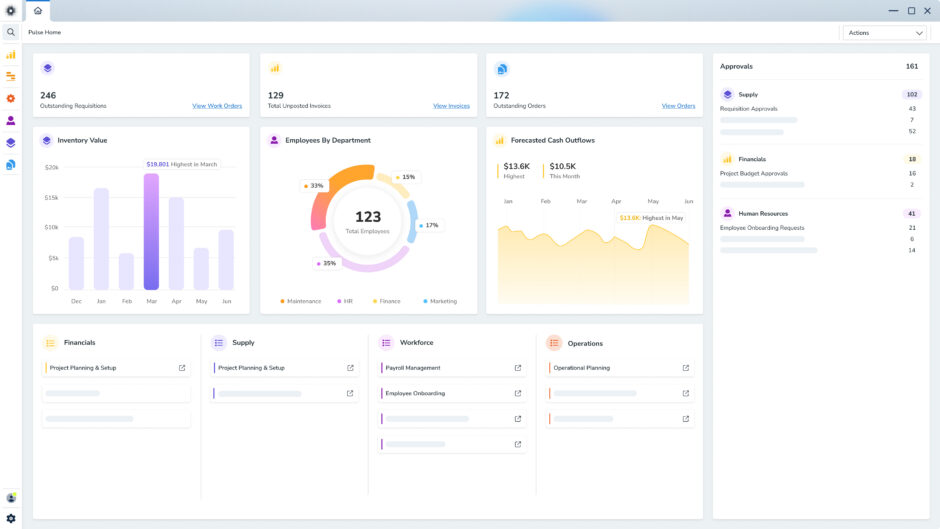
Stay on top of CapEx and OpEx with Pulse Financials. Adaptive for global compliance, this flexible financial management and accounting system gives you the tools to manage spending effectively—from setting thresholds and tracking sign-offs to blocking unauthorised purchases and monitoring costs within approved budgets over time.
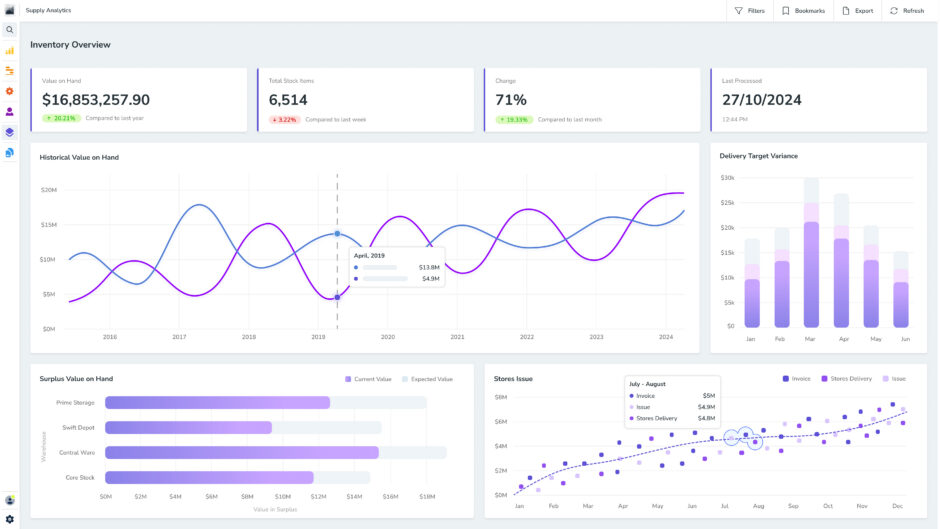
It also integrates seamlessly with Pulse Analytics for real-time data synchronisation and instant financial insights. With a single source of truth, your finance team can access up-to-the-minute financial data anytime, anywhere.
Contact us to get started with a free demo.