Capital expenditure (CapEx) refers to long-term investments that support business growth, efficiency, and sustainability. Whether it’s expanding facilities, acquiring machinery, or upgrading technology, these funds can shape the future of your company.
But to boost productivity and profitability, you’ll need to stay on top of CapEx with smart tools and strategic insights.
Backed by decades of experience, Pulse Financials is built to optimise CapEx planning and tracking. Equipped with this financial management software, you’ll be able to streamline these investments, improve forecasting, and integrate management into broader financial strategies.
Here, we’ll cover the fundamentals of CapEx, including what it is, how to manage it and other key considerations. Keep reading to learn how to make informed investment decisions that drive long-term success.
What is capital expenditure?
Capital expenditure—CapEx for short—is the money a business spends on acquiring, upgrading, or maintaining physical and intangible assets that provide long-term value. These investments are essential for scaling operations, increasing productivity, and staying competitive.
The CapEx formula goes like this:
CapEx = (Ending PPE – Beginning PPE) + Depreciation
Where:
- PP&E: Property, Plant, and Equipment – a key asset category on the balance sheet.
- Depreciation: The reduction in the value of assets over time.
Let’s say a company starts the year with $450,000 in PP&E and ends the year with $700,000. If depreciation for the year is recorded at $80,000, the CapEx calculation would be:
CapEx = (700,000 – 450,000) + 80,000
This means the company invested $330,000 in new assets over the year.
Capital expenditure vs. operational expenditure
| Aspect | Capital Expenditure (CapEx) | Operational Expenditure (OpEx) |
| Purpose | Long-term asset investment | Day-to-day operational costs |
| Accounting Treatment | Depreciates over the asset’s lifespan | Fully expensed in the period incurred |
| Examples | Purchasing machinery, buildings, and software development | Rent, utilities, wages |
While CapEx involves large upfront investments that help companies to grow in the long run, operational expenditure (OpEx) refers to recurring operational costs that can be expensed in full.
Examples of capital expenditure
CapEx spending is typically directed towards large-scale projects with specific orders varying across industries and organisations. After all, different businesses have unique asset requirements.
A manufacturing company, for instance, might prioritise heavy machinery, while a tech startup may invest more in software and IT infrastructure.
That being considered, here are some common types of capital assets:
Buildings and land
- Buildings – Purchasing or constructing office spaces, warehouses, and production facilities falls under CapEx, as these assets provide long-term operational value.
- Land – Whether vacant or developed, land is technically considered a capital expenditure. Unlike other assets, it doesn’t depreciate and stays on the balance sheet at its original cost. Note that, as it’s a one-off purchase, this expense isn’t typically tracked using a CapEx software product.
Equipment and technology
- Machinery and equipment – Essential tools and machines used in manufacturing or operations qualify as CapEx if they exceed a set cost threshold. Many businesses use a $2,500 benchmark.
- Computer hardware and software – Business-critical technology like servers, laptops, and enterprise software can be capitalised, depending on cost and usage.
Office and operational assets
- Furniture and fixtures – Items like desks, chairs, and shelving units used to equip offices, warehouses, or other facilities are considered fixed assets.
- Vehicles – Company-owned vehicles used for operations, deliveries, or services qualify as capital expenditures. Personal vehicles used for business do not.
Intangible assets
- Intellectual Property & Agreements – Non-physical assets like patents, trademarks, goodwill, and non-compete agreements often arise from acquisitions and represent long-term investments.
While this roundup highlights common capital expenditures, your business might have unique assets that also qualify. To be safe, consult an accountant who can help ensure accurate classification and compliance with financial standards.
Why does capital expenditure matter?
CapEx is a crucial aspect of financial planning and plays a key role in determining a company’s long-term success. Investing wisely in assets can lead to increased efficiency, higher output, and competitive advantages.
Key benefits of capital expenditure include:
Business growth
By investing in larger facilities, state-of-the-art machinery, and advanced technology, businesses can expand their capacity, increase production, and tap into new markets more effectively. This kind of investment enables sustainable long-term expansion and competitive scaling.
Cost savings
Modern equipment and automation solutions can significantly reduce operational costs by improving energy efficiency, minimising downtime, and reducing reliance on manual labour. Over time, these savings accumulate and contribute to higher profitability.
Financial health
A well-planned CapEx strategy contributes to better financial management by ensuring businesses allocate resources effectively. By investing in essential assets while maintaining cash flow stability, companies can optimise their financial position and increase shareholder value.
Competitive advantage
Keeping up with industry advancements ensures that businesses remain ahead of their competitors. Companies that invest in innovative technology, better infrastructure, and smarter processes can differentiate themselves, offer better products or services, and capture a larger market share.
Maintenance and upgrades
Businesses need to invest in regular CapEx for maintenance and upgrades that keep assets in good working condition. This delays the need for costly replacements and extends each asset’s usable life.
Considerations for capital expenditure accounting
Capital expenditures are recorded as assets on a company’s balance sheet rather than being counted as immediate expenses on the profit and loss statement.
As these investments provide value over time, their costs are spread out across their useful life through depreciation or amortisation.
When it comes to CapEx accounting, you’ll need to keep the following factors in mind:
- Depreciation and amortisation: Physical assets like buildings lose value over time and are depreciated, while intangible assets such as trademarks are amortised.
- Impact on financial statements: CapEx is listed under investing activities on the cash flow statement and is reflected as an asset on the balance sheet.
- Strategic budgeting: Companies must plan their CapEx wisely to allocate funds effectively and avoid financial strain. You’ll need to balance financial stability with the necessary asset procurement to stay competitive.
Capital expenditure and cash flow
Managing capital expenditure (CapEx) effectively is crucial for maintaining a healthy cash flow.
Since CapEx involves a significant upfront investment, businesses need to strike a balance between spending on growth and ensuring liquidity for day-to-day operations.
Free cash flow (FCF) is a key indicator of financial health, showing how much cash remains after covering operational costs and capital expenditures.
Here’s the free cash flow formula:
FCF = Operating cash flow – CapEx
Crunched the numbers, but not sure what they mean?
A positive FCF indicates that a company is generating enough cash to sustain investments and fund future growth.
Meanwhile, a negative FCF might signal overinvestment or liquidity challenges, requiring a review of spending priorities.
Depending on your circumstances, potential strategies to maintain cash flow stability include:
- Investing in high-impact assets – Prioritise capital expenditures that directly enhance productivity and revenue.
- Exploring financing options – Reduce immediate cash strain by using loans, leases, or asset financing.
- Tracking cash flow proactively – Regularly monitor financial statements to identify potential risks and adjust budgets accordingly with software like Pulse Financials.
Budgeting and forecasting capital expenditure
Reduce the risk of overspending by allocating, tracking and forecasting your CapEx budget properly.
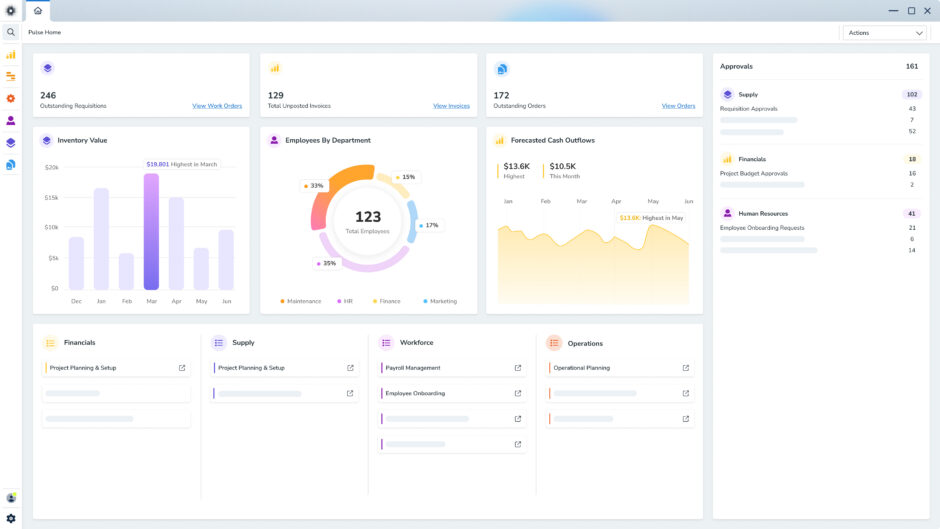
Pulse Financials makes this easy. You can enforce CapEx limits from the outset, record spend on every item and block unauthorised purchases to stay on budget.
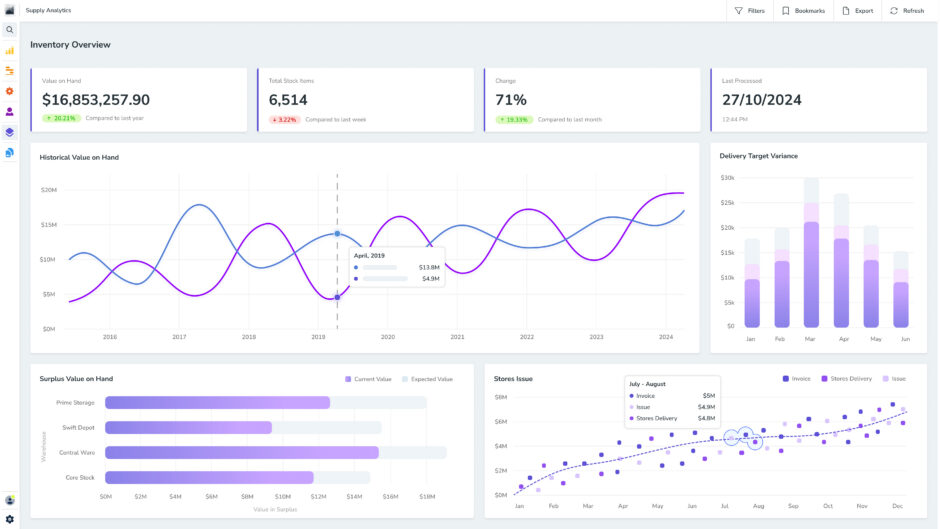
This software also gives you the financial visibility to plan investments in the right assets at the right time. Analyse spending trends to predict future needs, prioritise high-impact purchases, and prevent budget overruns.
Monitor and manage capital expenditure with Pulse Financials
Capital expenditure is a key driver of business growth and financial stability. With a clear understanding of its elements and the right tools to manage them, you can make smarter investment decisions that fuel long-term success.
Take control of the complete CapEx lifecycle with Pulse Financials, a simple, secure and scalable software built for businesses of all sizes.
Set clear limits that stop overspending, track sign-offs of the spend for every order, oversee costs within the approved budget, and monitor spending with various suppliers. Plus, manage the capitalisation of completed CapEx spend to the fixed asset register for full compliance and traceability.
For even greater insights, pair Pulse Financials with other ERP modules like Pulse Analytics. Featuring real-time data synchronisation, updates made anywhere are instantly available system-wide for a single source of truth.
Get started with a free demo and gain full financial visibility anytime, anywhere.