In an era defined by mobile apps and digital interactions, businesses have access to more data than ever before. How that data is used can spell the difference between thriving in a competitive market or falling behind.
Legacy business intelligence tools often struggle to keep pace, creating challenges like data silos, collaboration hurdles, and conflicting insights. Cue cloud analytics—a game-changing solution that simplifies and supercharges the review of vast data sets.
With its scalability, user-friendly interface, and ability to deliver insights to everyone regardless of technical expertise, cloud analytics empowers teams to make data-driven decisions anytime, anywhere. In this guide, we unpack everything you need to know about cloud analytics: what it is, why it’s crucial, and how to make it work for your organisation. Let’s dive in.
What is cloud analytics?
Cloud analytics is an approach in which data and business intelligence (BI) processes take place on vendor-managed cloud computing infrastructure. That means instead of depending on on-premise servers, your business can harness the agility and scalability of a public or private cloud platform. This powerful solution covers start-to-finish data analysis, from collection and storage to management and visualisation. Reveal trends, predict outcomes, and draw actionable insights from complex datasets.
Plus, built-in collaboration features enable team members to share findings seamlessly. Cloud-based analysis often leverages Artificial Intelligence (AI), like machine learning (ML) and deep learning (DL) models. With this technology on hand, businesses of all sizes can make smarter decisions faster and boost efficiencies across the board.
What’s the difference between on-premises and cloud analytics?
While on-premises and cloud analytics share similar goals in processing and interpreting data, the two approaches differ in price, ease of use and scalability. Cloud analytics eliminates the need for businesses to invest in, manage, and maintain expensive data centres, delivering a more cost-effective, convenient and flexible solution.
Moreover, modern organisations generate vast amounts of data every day, whether from social media, IoT devices, or other digital interactions. As much of this information originates in the cloud, cloud-based analytics offers a simple solution for processing, storing, and analysing it. All things considered, this game-changing technology is the preferred choice for many businesses today.
How cloud analytics works
Cloud analytics leverages the power of cloud computing—a network of virtual servers distributed across the internet—to transform raw data into actionable insights. Data from a variety of sources, including transactional systems, websites, social media platforms, and CRM tools, is collected and securely transmitted to cloud servers.
These servers, managed by a vendor, store and organise the data in one centralised location, ensuring both security and accessibility.
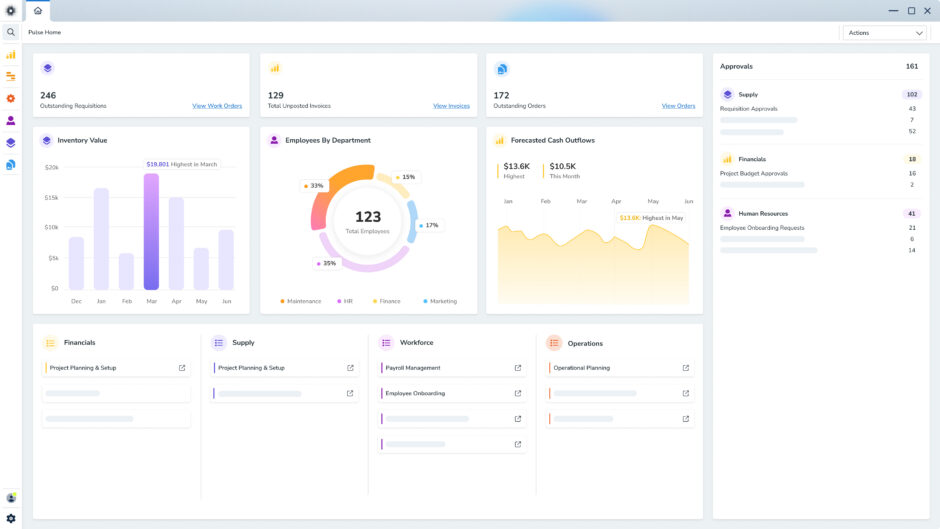
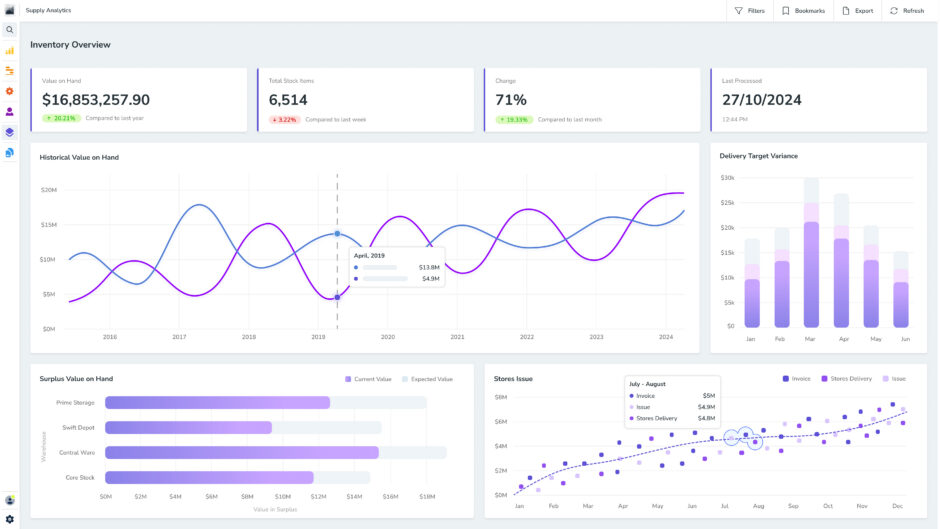
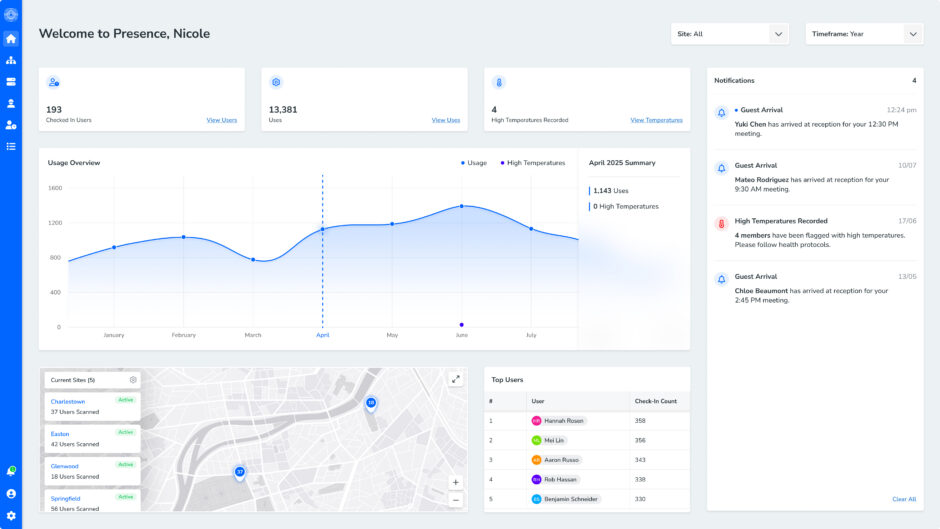
Users can then create dashboards, visualisations, and reports from any device with internet access.
While each cloud analytics tool offers unique features, most systems share the below core functionalities:
Data models
When data reaches the cloud, it’s arranged into structured data models. These models define the relationships, attributes, and structure of the data, much like a blueprint guides the construction of a building.
By streamlining how data is organised, data models make querying and retrieving information far more efficient.
Regardless of complexity, all data models aim to visually represent relationships between data points, providing a clear, consistent method for managing and interpreting information.
They’re essential for ensuring that data can be easily formatted, sorted, and understood.
Processing applications
The heart of cloud analytics lies in processing this organised data. Specialised applications handle large datasets stored in data warehouses, processing them quickly and efficiently.
These tools use algorithms and queries to uncover patterns, trends, and anomalies, turning raw data into valuable insights.
For example, these applications might reveal a positive correlation between cold weather and blanket sales for a homewares retailer.
Many systems also offer automation capabilities, using AI to transform and simplify data, making it accessible even for non-technical users.
Analytics models
While data models organise and visualise information, analytics models interpret it and predict potential outcomes. These models form the backbone of business intelligence and advanced analytics.
With cloud analytics, users can perform a range of tasks, from generating reports and conducting streaming analytics to using predictive analytics, machine learning, and embedding insights into other systems. These capabilities empower businesses to not only understand their data but also act on it with precision and foresight.
Types of cloud analytics
When it comes to cloud analytics, your environment matters. You’ve got three main options: public cloud, private cloud, and hybrid cloud.
Here’s how they stack up:
Public cloud
Public cloud analytics run on shared infrastructure. Think of it as a multitenant setup—multiple organisations use the same resources, like virtual machines, storage, and data processing, but without sharing their actual data.
It’s fast, affordable, and scales effortlessly, making it a smart move for businesses that need an affordable yet powerful solution.
Private cloud
Private cloud analytics are all yours. Hosted on-premises or on dedicated third-party servers, this option delivers top-notch security and privacy. But exclusivity comes at a price. Private clouds tend to be more expensive and challenging to scale, making them ideal for organisations with strict compliance needs and a bigger budget.
Hybrid cloud
Hybrid cloud analytics combine the best of both worlds. Use the public cloud for everyday data processing while keeping your sensitive information locked down in a private cloud or on-premises system.
It’s flexible, secure, and ideal for businesses juggling diverse data requirements. Plus, hybrid setups let you run analytics wherever your data lives—whether it’s in the cloud or on-site.
Benefits of cloud analytics
In a world where agility and data-driven decision-making are paramount, the limitations of on-premises solutions are becoming glaringly obvious.
As remote work and distributed teams become the norm, cloud analytics has emerged as the go-to solution for businesses looking to stay competitive.
Cloud analytics unlocks invaluable opportunities, enabling businesses to make smarter decisions in real time, process massive datasets easily, and uncover deeper insights across industries.
Here’s why more organisations are shifting their analytics to the cloud to drive growth:
Unrivalled flexibility
Cloud analytics offers a level of agility and scalability that on-premises solutions simply can’t match.
Unlike traditional systems that require costly hardware and additional resources to handle growth, cloud-based analytics adapts effortlessly to your needs.
With a pay-as-you-go model, businesses can scale resources up during high-demand periods to maintain seamless performance or scale down during slower times to minimise costs.
This dynamic scalability ensures your system stays responsive, efficient, and budget-friendly, no matter how your requirements evolve.
It’s a flexible, forward-thinking approach designed to keep your operations running smoothly in any situation.
Lower costs
Switching to cloud analytics can lead to significant cost savings for organisations.
As mentioned above, by moving away from on-premises systems, you eliminate the need for costly hardware investments and ongoing maintenance. On-premises solutions demand high upfront costs for servers and infrastructure, along with in-house expertise to manage and maintain them.
Cloud platforms, on the other hand, let you pay only for the compute and storage you actually use, scaling resources up or down as needed.
Cloud analytics also automate updates and upgrades, saving organisations from the hassle and expense of manual maintenance. This streamlined approach curbs long-term costs while boosting system performance.
Beyond IT infrastructure savings, cloud analytics uncovers inefficiencies that drain resources and optimise internal processes.
Imagine onboarding: While the company average may be 10 days, the sales team might achieve it in just 5. With cloud analytics, HR could pinpoint the sales team’s strategies and apply them organisation-wide, getting new staff up to speed faster.
Long story short? By addressing inefficiencies and enabling smarter resource management, cloud analytics delivers both immediate and long-term cost savings.
Reliable security
Trusted cloud providers prioritise data protection with advanced security protocols like encryption and multi-factor authentication. Regular updates and automated backups add another layer of defence, creating a resilient environment to guard against potential threats.
With security at the forefront, cloud analytics minimises manual configurations and exposure to vulnerabilities. This ensures sensitive information stays protected, giving you the confidence to take advantage of your data with confidence.
Convenient collaboration
The workplace has evolved, and your distributed teams—along with suppliers and partners—need immediate, secure access to actionable insights from any location.
Cloud analytics simplifies this by delivering fully interactive, governed data access on any device, from anywhere.
It brings clarity and collaboration to the forefront, providing a shared space for teams to analyse, interpret, and strategise with consistent data in real time.
Without this unified approach, departments might tackle the same question but end up with conflicting answers, fueling confusion instead of progress. With cloud analytics, everyone’s working from the same playbook, driving alignment and smarter decisions.
Seamless third-party data
Relying solely on proprietary data risks missing the bigger picture—a shortfall modern businesses can’t afford.
The good news?
Incorporating third-party data into your analysis can transform the way you understand and respond to your market.
From weather patterns and economic reports to social media trends, external data offers a richer context for understanding customer behaviour and fine-tuning supply chains.
Cloud analytics enables businesses to integrate these external insights, bringing new possibilities beyond the limits of what you own.
Your business can uncover untapped customer segments, identify high-value leads, and adapt quickly to changing conditions.
Data democratisation
When your data lives in disconnected systems—like your CMS, ERP, and marketing tools—it’s like trying to complete a puzzle with missing pieces.
Cloud analytics solves this problem by uniting all your data into one central hub. That means no more outdated spreadsheets or conflicting data. Instead, it transforms complex information into easy-to-use dashboards and reports, making the same insights accessible to everyone, not just the data experts.
This inclusivity fuels smarter decision-making across teams, creating a culture where data drives innovation, strategy, and growth. With a clear, complete picture of your business, your team can move faster and think bigger.
Stronger performance
Successful organisations know the power of data to uncover what’s thriving, what’s lagging, and how to fix inefficiencies.
Modern cloud analytics put instant insights front and centre, giving teams faster access to the data they need. This allows businesses to replicate successes and quickly address potential issues before they escalate.
Cutting-edge solutions go even further, using AI and augmented analytics to uncover hidden opportunities and guide smarter decision-making.
Your business can use cloud-based analytics to track website traffic, sales, marketing campaigns, and social media activity. Quickly access and act on performance data to see what’s working and pivot when needed.
More competitive offerings
In today’s competitive market, data-driven improvements are no longer a luxury—they’re the foundation for growth and relevance.
Cloud analytics empowers businesses to refine the testing and evaluation of new product launches, delivering insights quickly without draining resources.
It also identifies untapped opportunities for innovation, spotlighting where to invest next and uncovering inefficiencies in service delivery that need immediate attention.
A better customer experience
Tap into smarter data systems to revolutionise the customer experience. Cloud analytics uncovers real-time insights from both experiential and operational data, offering a clear picture of customer satisfaction as it unfolds.
Armed with this intelligence, businesses can refine every touchpoint in the buyer’s journey. From hyper-personalised interactions to deeper engagement, cloud analytics empowers organisations to not just meet expectations but redefine them.
Optimised pricing and promotions
Understanding customer behaviour is the backbone of any successful business strategy.
Cloud analytics empowers businesses to uncover buying patterns, track customer behaviours, and assess how different strategies influence purchasing decisions.
With this data-driven insight, organisations can fine-tune their pricing and packaging strategies to better align with customer needs and market dynamics.
Armed with a deep understanding of customer habits, marketing teams can also craft highly targeted campaigns, delivering the right message at the right time to guide customers through every stage of their buying journey.
Choosing a cloud analytics platform
The right choice of cloud analytics platform depends on your data needs, business goals, and IT ecosystem. Here’s a quick take on what to look for:
Cloud-native only
Don’t settle for platforms masquerading as “cloud-based” but requiring local software.
A genuine cloud-native platform runs entirely online, eliminating the need for local data storage, lowering security risks, and offloading infrastructure management, updates, and disaster recovery. Focus on what matters—extracting insights.
Hosting type
Your analytics shouldn’t be tied down. Whether you rely on public, private, hybrid, or multi-cloud setups, pick a platform that adapts to your architecture. You should be able to analyse data wherever it lives without compromising compliance or efficiency.
Efficient implementation
Moving your data to a vendor’s cloud isn’t always practical or affordable. Look for a solution that works with your data where it’s most effective, avoiding high transfer costs and performance lags. Bonus points for escaping vendor lock-in.
One entry point
Complexity kills adoption. Choose a platform that offers a single login for seamless access and easy management. Administrators should have a single console to control permissions, monitor usage, and tweak deployments across clouds and teams—all without a headache.
Readily available data
The best platforms democratise data. Look for a self-service experience where anyone—not just the IT crowd—can access, explore, and analyse data through intuitive tools like catalogues and user-friendly dashboards.
True scalability
Speed and scalability matter. Platforms stuck in query-based limitations won’t cut it. Choose one designed to handle high demand, delivering fast results even when used by multiple teams simultaneously. Scaling should be a breeze, whether you’re expanding up, down, or sideways.
Advanced automation
Automation takes analytics to the next level. Pick a platform that uses AI to streamline repetitive tasks like merging datasets, transforming data, and building visualisations—freeing your time for strategic thinking.
Importantly, AI should amplify your capabilities, not operate in a mysterious “black box.” The right platform uses AI to enhance your experience with features like natural language queries and smart insight suggestions, blending machine intelligence with human intuition.
Solid security
Your cloud analytics platform should ensure airtight security. With flexible permission controls, you can make data accessible to the right people and locked away from everyone else.
When choosing a SaaS provider, look for those with transparent and audited security practices to keep your data safe while empowering your team to work smarter.
The ideal cloud analytics platform doesn’t just tick boxes—it transforms how your organisation handles data, making insights faster, smarter, and more accessible for every team. It’s about choosing a partner that evolves with your business and drives lasting impact.
Drive smarter business decisions with Pulse Analytics
Success in today’s business world hinges on leveraging powerful, data-driven insights to fuel growth and collaboration.
Traditional on-premises solutions often come with high costs and inefficiencies, while cloud analytics provides the advanced tools needed to uncover patterns, seize opportunities, and make smarter decisions.
Pulse Analytics empowers businesses of all kinds with real-time data insights, automated reporting, and intuitive visualisations—all seamlessly integrated with any ERP system.
Our cloud-based platform delivers unmatched agility, precision, and automation, turning complex data into actionable insights at a moment’s notice. That way, you can unlock full visibility into your performance with dynamic, real-time dashboards tailored to your KPIs.
Let’s keep your business ahead of the curve with effortless data capture, integration, and analysis.