From manufacturing operations to corporate offices, every business relies on a strong procurement process to acquire goods and services efficiently.
Effective procurement is about securing the right materials at the best price at the right time without disruptions. By refining these practices, businesses can drive cost savings, strengthen supplier relationships, and maintain seamless operations.
Not sure where to start or how to improve your strategy?
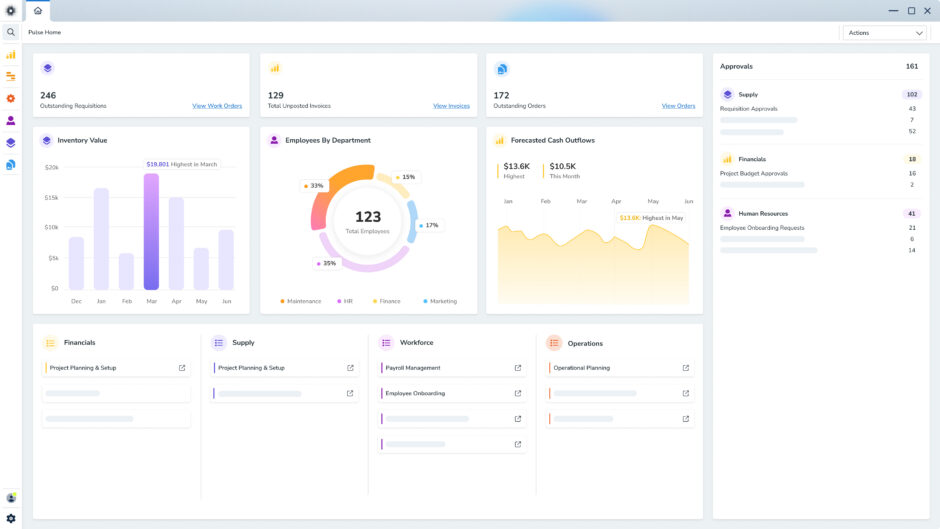
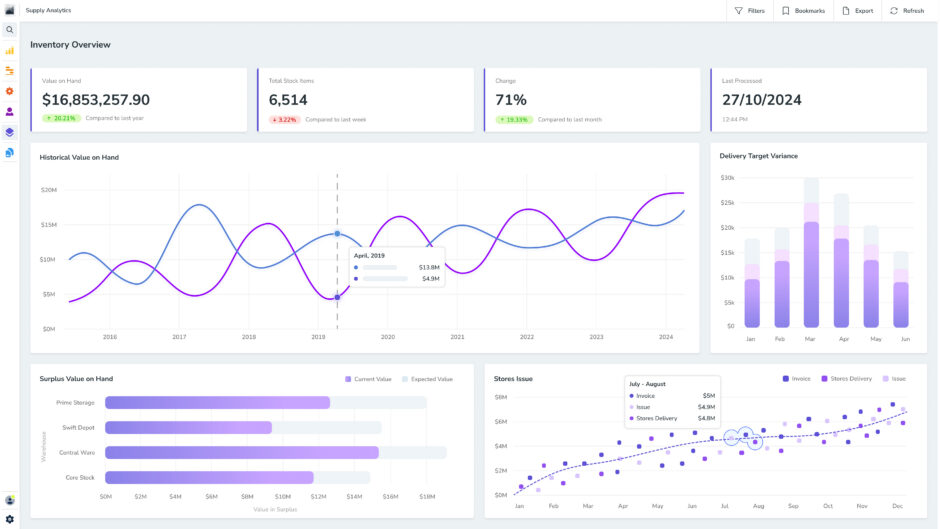
Take advantage of technology with Pulse Supply. Featuring real-time data, smart automation, and mobile capabilities, this supply chain software simplifies the entire procurement process—from supplier contracts to inventory management.
In this guide, we’ll explain essential procurement steps, best practices in 2025, and their potential benefits for your organisation. Keep reading to learn how to implement a modern procurement business process that supports long-term success.
What is procurement in business?
At its core, procurement is the process of finding, acquiring, and managing the goods and services an organisation needs to operate efficiently. This strategic function ensures that businesses obtain products and services at the best value while maintaining strong supplier relationships and controlling costs.
Procurement teams work closely with internal stakeholders to understand business needs, forecast demand, and secure reliable suppliers.
By balancing quality, cost, and efficiency, procurement plays a critical role in a company’s overall success. A well-run procurement system keeps everything flowing smoothly, from sourcing materials to managing payments.
The 3 Ps of procurement
Every business has its own way of managing the procurement life cycle, but no matter the approach, three core elements remain essential:
- Process – How things get done
- People – Who makes it happen
- Paperwork – How to keep track of it all
Process
A smooth procurement process is like a well-oiled machine—it keeps operations on track without unnecessary delays or costs. When done correctly, procurement ensures that supplies arrive on time, budgets stay in check, and teams know exactly what to do at each step.
But when the process is messy or unclear, things start falling apart. Late orders, missed approvals, and overspending can disrupt business flow and even damage relationships with suppliers. That’s why a clear, well-defined procurement process is essential.
People
Procurement isn’t a one-person job. It involves multiple teams—procurement specialists, finance departments, and end-users—who all play a role in making informed decisions.
Smaller purchases might only need a quick sign-off, but big-ticket items often go through multiple layers of approval, ensuring quality, compliance, and budget alignment.
By having the right people involved at the right time, businesses can avoid delays and make smarter purchasing choices.
Paper
Documentation might not be exciting, but it’s the backbone of a reliable procurement system. Clear records of orders, approvals, and payments help businesses track spending, evaluate supplier performance, and stay audit-ready.
Gone are the days of drowning in paperwork—modern procurement software like Pulse Supply keeps everything quick and accessible with automated workflows and online records.
With a strong digital trail, your procurement process can stay consistent and efficient, even if teams change.
Types of procurement
Companies rely on different procurement methods to keep operations running smoothly. These typically fall into four main categories: direct procurement, indirect procurement, goods procurement, and services procurement.
Each serves a unique role in supporting business functions, whether it’s securing materials for production, maintaining day-to-day operations, or outsourcing expertise.
Services procurement
Not all procurement involves physical goods—many businesses count on services to fill skill gaps, streamline operations, and enhance efficiency.
Services procurement covers non-tangible, people-driven solutions like:
- Consulting firms and agencies – Marketing, HR, and business strategy services
- Legal and compliance services – Law firms and regulatory advisors
- IT and security – Managed IT services, cybersecurity, and on-site security personnel
- Software as a Service (SaaS) – Cloud-based tools like accounting or project management software
- Facilities and maintenance – Repairs, cleaning, and property management
Depending on the industry, services procurement can involve direct procurement (essential for delivering products or services) or indirect procurement (supporting operations without directly affecting sales).
Direct procurement
Direct procurement involves acquiring materials, components, or services that are directly tied to a company’s core product or service.
These purchases have a direct impact on revenue, brand reputation, and overall business success, making strong supplier relationships critical.
Examples include:
- For manufacturers – Raw materials, machinery, and production components
- For retailers – Wholesale goods for resale
- For service providers – Tools, software, or specialist subcontractors needed to deliver client services
Since direct procurement influences product quality, pricing, and supply chain reliability, businesses must carefully manage vendor relationships and logistics to ensure consistency.
Indirect procurement
Unlike direct procurement, indirect procurement focuses on acquiring goods and services that keep the business in motion but don’t directly contribute to product creation or revenue.
These purchases are important for daily operations, employee productivity, and maintaining infrastructure.
Examples of indirect procurement include:
- Office supplies & equipment – Desks, chairs, computers, and stationery
- Marketing & advertising – Digital campaigns, print media, and sponsorships
- Professional services – Legal advice, IT support, and financial consulting
- Facilities maintenance – Cleaning, HVAC servicing, and landscaping
While indirect procurement doesn’t generate direct profit, it plays a key role in efficiency, employee satisfaction, and long-term business sustainability.
Goods procurement
Goods procurement covers the acquisition of tangible products, whether they’re raw materials, office essentials, or fully manufactured items. It can fall under both direct and indirect procurement, depending on the business function.
Here are some common examples of goods procurement:
- Raw materials for manufacturing
- Equipment and tools for production or operations
- Office furniture and supplies
- Computers, printers, and company vehicles
A strong goods procurement strategy ensures businesses source high-quality materials at competitive prices.
How procurement works
A streamlined procurement process brings together finance, legal, IT, and supply chain teams to drive smarter decision-making and seamless operations. Breaking it down into key phases makes it easier to manage and continuously improve.
Planning
Everything starts with a solid plan. Budgets are set, future needs are forecasted, and purchasing strategies are aligned with business goals.
This phase ensures that teams have the resources they need while avoiding unnecessary spending. Careful planning prevents reactive buying and helps businesses stay ahead of supply demands.
Sourcing
Choosing suppliers goes beyond price—it’s about quality, reliability, and long-term value. Competitive analysis, contract negotiations, and supplier evaluations take place to secure the best options.
A strong sourcing strategy reduces risks, prevents delays, and builds reliable partnerships that support business growth.
Acquisition
With suppliers in place, orders are placed, invoices are verified, and payments are processed. Every contract term, delivery schedule, and pricing agreement is monitored to keep spending in control and operations running without disruption.
Well-managed acquisition and payment systems prevent overspending and ensure timely order fulfilment.
Evaluation
Procurement doesn’t end when a purchase is made. Supplier performance, cost trends, and efficiency metrics are tracked to identify areas for improvement. Data-driven insights allow businesses to refine strategies, strengthen supplier relationships, and uncover new savings opportunities.
Now that you have an idea of the general phases involved, let’s take a closer look at the key steps in any procurement process.
9 steps for a successful procurement process
While each organisation tailors its procurement methods, following a clear, repeatable process helps streamline purchasing and eliminate waste.
Here are nine key procurement steps.
1. Pinpointing what’s needed
Every purchase starts with a need—whether it’s raw materials for production, software for teams, or new equipment to support operations.
Businesses assess demand, forecast usage, and outline product specifications, ensuring that spending aligns with strategic goals.
2. Submitting a Purchase Request
Once the need is established, an internal purchase requisition is submitted for approval. This request includes essential details like product descriptions, quantity, estimated costs, and preferred suppliers.
A well-documented request speeds up decision-making and prevents unnecessary spending.
3. Planning the sourcing strategy
With approval in place, procurement teams develop a sourcing plan. Depending on the complexity of the purchase, this may involve issuing Requests for Quotation (RFQs) or Requests for Proposal (RFPs) to gather supplier bids.
A strong procurement strategy ensures businesses get the best quality, pricing, and service while minimising risks.
4. Comparing and selecting suppliers
Procurement teams and department leaders evaluate supplier bids, looking beyond cost to consider reliability, reputation, sustainability, and delivery timelines.
As well as the obvious price factor, it’s important to choose a supplier that offers long-term value and the reliability to bolster business continuity.
5. Negotiating terms and closing the deal
Before finalising an order, businesses negotiate pricing, delivery schedules, payment terms, and warranties.
Strong negotiations create better cost efficiencies, secure reliable service, and establish clear expectations that benefit both parties. Once agreed upon, contracts are signed.
6. Issuing a Purchase Order (PO)
A Purchase Order (PO) is then created and sent to the supplier, detailing the exact products, quantities, costs, and agreed terms.
Once accepted, the PO becomes a legally binding document, ensuring both sides are aligned on expectations.
7. Receiving and inspecting the order
Upon delivery, the procurement or receiving team checks that the goods or services meet specifications.
Any discrepancies or issues are flagged for resolution, ensuring that only approved, high-quality items move forward into operations.
8. Invoice matching and payment processing
Before payments are processed, businesses verify the supplier invoice against the original purchase order and received goods. This three-way matching process prevents overpayments, fraud, and invoicing errors.
Once confirmed, payments are scheduled based on agreed terms, sometimes taking advantage of early-payment discounts.
9. Reviewing and refining the procurement process
Every procurement cycle offers insights for future improvements. Teams review supplier performance, assess cost efficiencies, and analyse spending trends.
This step strengthens supplier partnerships, bolsters cost control, and refines procurement strategies for smarter decision-making.
Benefits of effective procurement
Whether securing raw materials, outsourcing services, or managing office supplies, an optimised procurement process connects businesses with reliable suppliers, ensures cost-effective purchasing, and supports broader company objectives.
Here’s how a well-executed procurement strategy creates real value:
Cuts costs
Every cost reduction in procurement boosts profitability.
By negotiating better contracts, sourcing competitively, and optimising purchasing workflows, businesses can reduce unnecessary expenses and free up capital for growth.
Bulk discounts, supplier consolidation, and automated purchasing solutions all contribute to stronger financial performance without compromising on quality.
Improves quality
A business is only as strong as the products and services it delivers. Procurement plays a critical role in maintaining high standards by carefully selecting vendors that align with performance expectations.
From raw materials to outsourced expertise, ensuring consistency and reliability safeguards brand reputation, customer satisfaction, and long-term success.
Aligns purchases with goals
Procurement decisions should fill an immediate need and drive strategic, long-term outcomes.
Whether the focus is on scaling operations, improving efficiency, or enhancing innovation, sourcing choices should directly support company objectives.
That’s why a data-driven approach ensures procurement isn’t just a cost centre but also a powerful tool for business growth.
Reduces risk
Disruptions in procurement can send shockwaves through an organisation. From supplier failures and market fluctuations to compliance challenges and logistical delays, risk is everywhere.
A smart procurement strategy includes contingency planning, diversified sourcing, and real-time monitoring to anticipate issues before they become costly problems.
Strong supplier relationships and robust contracts keep operations resilient and responsive.
Supports sustainability
Today’s businesses are expected to operate responsibly. Choosing sustainable materials, supporting fair trade initiatives, and reducing waste can boost brand reputation and consumer trust.
Procurement teams play a key role in ensuring that suppliers adhere to ethical labour practices, environmental standards, and corporate social responsibility (CSR) commitments.
Obstacles in the procurement process
Without a structured and efficient procurement system, businesses face a range of barriers that can drive up costs, reduce efficiency, and create unnecessary risks.
Here are some of the most common challenges and their impact on business operations:
A disconnected supplier network
Working with multiple suppliers across different categories can lead to inconsistencies in service quality, pricing, and contract management.
A fragmented supplier base makes it harder to streamline procurement, leverage bulk discounts, or maintain strong vendor relationships.
Without proper supplier consolidation, businesses may struggle with inefficiencies and missed cost-saving opportunities.
Limited financial visibility
A lack of real-time data and spend tracking can create blind spots in procurement, making it difficult to monitor expenses, control budgets, and identify inefficiencies.
Without clear insights, businesses risk overspending, duplication of purchases, and inaccurate financial forecasting, all of which impact profitability.
Off-process purchases
Decentralised procurement often results in maverick spending, where employees bypass approval workflows to make independent purchases. This lack of oversight leads to inflated costs, inconsistent product quality, and missed negotiation opportunities.
Standardising procurement channels helps enforce company policies, reduce unnecessary expenses, and improve supplier accountability.
Inefficient manual tasks
Relying on paper-based workflows can add to your team’s administrative workload and make room for mistakes.
Moreover, processing purchase requests, approvals, and invoices manually leads to delays, bottlenecks, and inconsistencies.
Automating these processes improves efficiency and reduces human error. It also frees up procurement teams to focus on more strategic tasks.
Compliance challenges
Procurement teams must ensure compliance with company policies, industry regulations, and contractual agreements.
Failure to manage risks—such as supplier non-compliance, legal issues, or data security breaches—can result in financial penalties, reputational damage, and supply chain disruptions.
A proactive compliance strategy ensures that procurement remains legally sound and risk-free.
Lack of strategy
Many businesses treat procurement as a transactional function instead of a strategic asset. Focusing solely on purchasing without exploring opportunities for supplier consolidation, cost reduction, and long-term partnerships can limit growth potential.
By shifting procurement from a reactive process to a proactive strategy, you can create opportunities for smarter sourcing, better supplier management, and increased efficiency.
Best practices for procurement processes
A modern procurement strategy balances automation, strategic sourcing, careful compliance, and continuous improvement.
By leveraging technology and data-driven insights, your business can build a procurement function that enhances efficiency, controls costs, and improves supplier partnerships.
Here are some top tips for a winning procurement system:
Automate for greater efficiency
Manual procurement processes slow down operations, increase errors, and create bottlenecks. Automating workflows with procurement software reduces paperwork, enhances accuracy, and accelerates approvals.
Automation tools — like those included with Pulse Financials — help manage everything from supplier selection to invoice processing, freeing up teams to focus on strategic decision-making instead of administrative tasks.
Centralise for better control
A decentralised procurement structure can lead to inefficiencies, unnecessary spending, and compliance risks.
On the other hand, centralising procurement through a dedicated ERP platform ensures transparency, simplifies contract management, and enhances accountability.
With all purchases, approvals, and supplier interactions managed in one place, organisations can track spending in real time and enforce consistent procurement policies.
Analyse spending to cut costs
A deep understanding of procurement spending helps businesses flag cost-saving opportunities and optimise sourcing strategies.
Regular spending analyses highlight expenditure trends, supplier performance, and areas where consolidation could bring better pricing.
With real-time data insights from custom dashboards like Pulse Analytics, your business can track metrics like vendor performance, total spending and outstanding transactions.
In turn, you could use this information to negotiate stronger contracts, leverage volume discounts, and prioritise high-value supplier relationships.
Be strategic with your sourcing
Effective procurement goes beyond just finding the lowest price. Strategic sourcing involves identifying and vetting suppliers based on quality, reliability, sustainability, and long-term value.
With competitive bidding, request-for-proposal (RFP) processes, and contract negotiations, your business can secure the best suppliers while fostering long-term, mutually beneficial partnerships.
Define procurement policies
Procurement policies set the foundation for consistency, compliance, and risk management.
Establishing clear guidelines for approval processes, spending limits, and contract terms ensures teams follow best practices.
Well-defined policies also help businesses demonstrate compliance during audits, manage supplier risk, and prevent unnecessary or unauthorised purchases.
Integrate procurement with other departments
Procurement systems should work seamlessly with accounting, finance, and ERP software to ensure a smooth flow of data across the organisation.
Integrated systems eliminate duplication, improve reporting accuracy, and provide real-time insights into purchasing trends.
By syncing procurement with finance, businesses gain a clearer picture of cash flow, commitments, and future purchasing needs.
Encourage collaboration
Procurement doesn’t operate in isolation—it demands input from multiple departments. Engaging finance, operations, legal, and end-users in supplier selection helps purchases align with business needs.
Collaboration also helps identify inefficiencies, improve stakeholder buy-in, and drive procurement decisions that add value beyond just cost savings.
Keep track of supplier performance
Supplier relationships impact cost, quality, and operational efficiency. Regular performance assessments help businesses track service levels, delivery times, and contract compliance.
Establishing key performance indicators (KPIs) allows procurement teams to measure supplier reliability, identify potential risks, and make informed decisions on contract renewals or alternative sourcing.
Make ongoing optimisations
The best procurement strategies evolve with changing business needs.
Encouraging feedback from stakeholders, staying informed about industry trends, and embracing continuous process improvements help organisations refine their approach over time.
So, implement feedback loops and ongoing training to help your procurement team stay proactive and agile.
Take advantage of AI technology
AI is changing the way procurement works—and you can use it to cut costs, save time, and make smarter decisions.
From spend analysis and contract management to supplier selection and compliance tracking, AI automates tedious tasks, reduces errors, and improves efficiency.
With AI-driven insights, you can easily spot trends, identify cost-saving opportunities, and flag potential risks before they become problems.
Generative AI goes even further, helping you refine sourcing strategies, predict demand, and negotiate better deals—all while improving transparency and agility.
By integrating AI into your procurement process, you free up time for tactical initiatives instead of getting bogged down in manual work.
The result?
A more efficient, cost-effective, and future-ready procurement operation.
Optimise your procurement process with Pulse Supply
A structured procurement process, backed by the right tools, leads to significant cost savings and increased productivity.
But juggling suppliers, tracking invoices, and making sense of endless data is no easy task—especially as businesses grow.
That’s where technology makes all the difference. A powerful procurement management platform simplifies workflows, enhances data analysis, and reduces costs, allowing teams to focus on strategy instead of admin-heavy tasks.
From requisition to payment, automate every step of your procurement process and take control of your supply chain with Pulse Supply.
Pulse Supply gives you complete control over contracts, suppliers, procurement, and inventory—all seamlessly integrated with Pulse ERP for real-time analytics, automation, and mobility.
Built for industries like mining and other high-demand sectors, it cuts inefficiencies, streamlines management, and maximises performance.
Request a free demo today.