Managing payroll can be one of the trickiest parts of running a business, but getting it right is essential. Whether you’re a sole trader, small business or a large corporation, an accurate payroll process keeps your operations running smoothly and your team happy.
After all, payroll involves more than just paying people. It ensures employee wages, tax, and superannuation are handled in compliance with Australian law. Even minor mistakes can bring compliance issues, fines, and a drop in staff morale — all of which impact your reputation and bottom line.
We’re here to help. In this guide, we explain payroll processing, from onboarding new hires and calculating pay to abiding by Australian Taxation Office (ATO) and Fair Work requirements. Plus, learn how modern payroll software can simplify every step.
What is payroll?
A key component of effective workforce management, payroll is the end-to-end process of calculating and paying your people correctly and on time — and meeting your legal obligations in Australia.
It covers wages and salaries, overtime and allowances, Pay As You Go (PAYG) withholding, superannuation, leave entitlements, deductions, payslips, ATO reporting (via Single Touch Payroll), and record-keeping.
Beyond simply “running pay”, payroll ensures every employee is paid accurately under the relevant award or agreement, the right tax is withheld and reported, super is calculated and paid, and compliant records are kept.
Why proper payroll management matters
A well-run payroll builds trust, supports compliance, and keeps your business running smoothly while making sure every employee is paid properly.
When payroll is processed accurately and on time, your team feels valued and confident that they’re being paid fairly. It also keeps your business compliant with Fair Work requirements, ATO obligations, and superannuation laws.
In Australia, employers are required to pay staff correctly under the right award or agreement, with PAYG tax withheld and super paid by the due date. A reliable payroll system helps you meet those obligations while avoiding costly errors or penalties.
When payroll slips up — even once — the ripple effect can be huge. Late or incorrect payments can damage morale, cause frustration, and make employees question the stability of the business.
On the other hand, getting payroll right shows professionalism and care. It builds loyalty, keeps your finances in order, and protects your reputation. Simply put, when payroll works well, everyone wins: your people, your business, and your peace of mind.
The payroll process in 9 steps: how to pay employees correctly
1. Collect employee information
Before your new hire’s first payday, it’s important to get their details set up correctly in your payroll system. In Australia, employers must collect and maintain accurate employee records and
issue payslips for every pay cycle, as required by the Fair Work Act and the ATO.
During onboarding, you’ll need to gather essential employee details like:
- The employee’s personal and contact information
- Tax File Number (TFN) declaration
- Superannuation fund details (via the Standard Choice form)
- Employment contract and pay rate information
- Any additional documents like visas, licences, or certifications if relevant
Once collected, these details are entered into your payroll system to set up the employee’s pay structure. This includes their salary or hourly rate, leave entitlements, superannuation, and any bonuses or deductions.
Getting payroll information right from day one helps lay the foundation for accurate, compliant, and stress-free processing.
2. Track attendance
Accurate time and attendance tracking is one of the most important parts of a smooth payroll process. It makes sure every employee is paid correctly for the hours they’ve worked while keeping your business compliant with Australian workplace laws.
Modern time tracking systems make this function easier than ever. Businesses can use time clocks, mobile apps, or online platforms to record when employees start and finish shifts, log breaks, and track overtime or leave.
By automating attendance tracking and linking it directly to payroll, you can cut down on admin work, improve accuracy, and ensure your team is fairly compensated every time.
3. Calculate gross pay and deductions
Once employee hours, attendance, and leave have been recorded, you need to calculate their gross wages and deductions.
This is where you determine what each team member has earned, as well as what needs to be withheld for tax, retirement contributions, and other obligations.
Gross wages include an employee’s base salary or hourly rate (which must be above the national minimum wage of $26.44 per hour as of 1 July 2026), plus any overtime pay, bonuses, commissions, or allowances.
To calculate net pay, subtract payroll deductions from gross wages. Under Australian law, deductions can only be made for the employee’s benefit, never for the employer’s. For employees under 18, written consent from a parent or guardian is also required.
Common pre-tax deductions include:
- Superannuation contributions
- HECS/HELP repayments
- Union fees or salary sacrifice arrangements
- Other voluntary deductions, such as charitable donations
Employers are responsible for correctly calculating and remitting these employee deductions to the relevant authorities on time.
Calculate tax withholding
Before your first pay run, you’ll need to register your new employee for PAYG withholding with the ATO. That way, the correct amount of income tax will be withheld from their pay and sent directly to the ATO on their behalf.
This is a legal requirement for all Australian employers and helps employees manage tax obligations throughout the year.
Here’s how it works.
Each pay cycle, your payroll software or accountant calculates the right PAYG withholding based on the employee’s income, TFN, and any declared offsets or deductions.
You then remit the withheld amount to the ATO, usually monthly or quarterly, depending on your business size and reporting obligations.
In addition to PAYG, many businesses may also be required to pay state or territory payroll tax, which is separate from income tax.
Payroll tax applies once your total wage bill exceeds a certain threshold, which varies between states and territories.
As each jurisdiction has different rates, thresholds, and lodgement rules, it’s important to check the specific requirements for where your employees work.
A word on Single Touch Payroll
Single Touch Payroll (STP) is a mandatory Australian Government system that reports your employees’ pay, tax, and super details to the ATO every time you run payroll.
Introduced in 2018 for large employers and made compulsory for all businesses in 2019, STP replaces the need for separate end-of-year reporting. In 2022, the rollout of STP Phase 2 expanded the information shared with the ATO to give clearer visibility of wages, entitlements, and deductions.
When you pay staff through STP-enabled software, this system automatically sends the ATO details like:
- Salaries and wages
- PAYG withholding
- Superannuation
- Allowances and deductions
- Overtime, bonuses, and commissions
- Leave taken
- Worker’s compensation
- Termination payments
Importantly, you still process pay and issue payslips as usual. STP just handles the reporting in the background to make payroll faster, more accurate, and compliant with Fair Work and ATO obligations.
5. Make superannuation contributions for retirement savings
Superannuation is how Australian employees save for retirement, and as an employer, you’re legally required to contribute to each eligible employee’s nominated super fund.
These payments, known as Superannuation Guarantee (SG) contributions, are made before tax is taken from wages and calculated on most earnings, including bonuses and allowances.
The current SG rate is 12% of an employee’s ordinary time earnings (OTE) as of 1 July 2025. Employers can choose to contribute more than the minimum SG amount, and employees can also make voluntary contributions to boost their retirement savings.
Contributions must be paid at least quarterly, by the due dates set by the ATO, and sent to a complying super fund via SuperStream, the government’s electronic reporting and payment standard.
Other super obligations as an employer include:
- Requesting Stapled Super details from the ATO when a new employee doesn’t nominate a fund.
- Providing employees with a choice of super fund and keeping records to prove this was offered.
- Submitting their TFN to their chosen fund within 14 days of receiving it.
- Keeping clear records of all super payments and submission dates.
6. Send payslips
Once payroll has been calculated and superannuation contributions are confirmed, the next key step is to create and distribute payslips. In Australia, employers need to issue payslips within one working day of payment, either electronically or in hard copy. Each payslip must clearly show:
- Gross and net pay
- PAYG tax withheld
- Superannuation contributions
- Allowances, deductions, and leave balances
- The employer’s ABN (if applicable) and pay period details
Precise, itemised payslips give employees a complete view of their pay and deductions, helping them manage their finances with confidence. They also serve as an official record that can protect both the employer and employee if a dispute ever arises.
Failure to provide correct or timely payslips can result in Fair Work penalties.
7. Make payments
Payment processing is at the core of every payroll process. It’s where all your hard work pays off, quite literally. Once calculations are complete, this step ensures employees receive accurate and timely payments.
Before each pay run, it’s important to double-check all details — including salaries, bonuses, overtime, and deductions — to ensure nothing is missed or miscalculated.
Most Australian businesses use direct deposit to transfer pay directly into employees’ bank accounts. It’s fast, reliable, and helps maintain trust by ensuring payments are made on schedule.
After payments are made, financial reconciliation aligns payroll transactions with your accounting records, helping maintain transparency and simplify audits.
By managing payment processing carefully, you’ll help keep your employees satisfied, your finances in check, and your business in line with Australian regulations.
8. Store payroll records
Recordkeeping is the backbone of a compliant and trustworthy payroll system. In Australia, employers are legally required to keep detailed and up-to-date payroll records for every employee.
That includes payslips, employment agreements, super contributions, and leave balances.
These records must be stored securely and remain accessible for at least seven years, as required by the Fair Work Act. To stay compliant:
- Maintain complete records for each employee, including wages, tax, and superannuation details.
- Conduct regular internal audits to catch errors early and improve payroll accuracy.
- Protect employee data with secure storage systems and limited access, ensuring privacy and compliance with Australian data protection laws.
- Use Single Touch Payroll (STP) to automatically report wages, tax, and super information to the ATO each pay cycle.
By keeping your payroll data organised, secure, and transparent, you’ll safeguard your business during audits, reviews, or disputes — and help ensure every employee is paid correctly, every time.
9. Complete end-of-year tax reporting
At the end of each financial year, employers have to complete several important payroll reporting and reconciliation tasks to make sure everything is correct and compliant.
You’ll need to confirm that all employee payments, tax withholdings, and superannuation contributions have been recorded and reported to the ATO.
Thanks to Single Touch Payroll (STP), end-of-year reporting is now much easier. Instead of issuing traditional payment summaries, employers can use their STP-enabled software to finalise and submit payroll data directly to the ATO.
This automated payroll process updates each employee’s Income Statement in myGov, so they can complete their tax return with up-to-date information.
To wrap up the financial year smoothly:
- Reconcile payroll records to ensure all wages, PAYG tax, and super contributions are accurate.
- Submit your final STP declaration to confirm the completeness of your year’s payroll reporting.
- Review any outstanding payments or errors and correct them before finalising your submission.
The benefits of using payroll software
Still spending hours manually processing payroll? Switching to the right software can save time, reduce stress, and give you confidence that your employees are paid accurately and on time, every time.
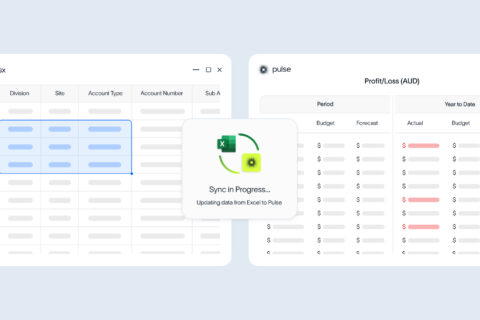
Modern payroll systems like Pulse are designed to simplify complex tasks, improve tax compliance, and free you up to focus on running your business.
Here are the key benefits of using our payroll software:
Improved accuracy and compliance
Even a small payroll error can lead to big problems, from underpayments to Fair Work or ATO penalties.
Software removes the guesswork by automating calculations for wages, tax, and superannuation. This ensures every pay run is accurate, compliant, and completed on time.
Pulse also adapts to multiple employee classifications, pay rates, and award conditions, making it easier to manage complex payroll structures across your business. Built-in compliance tools help you meet all legal and tax obligations, reducing the risk of fines or audit issues.
A quicker and easier payroll system
You don’t need to be an accountant to run payroll smoothly.
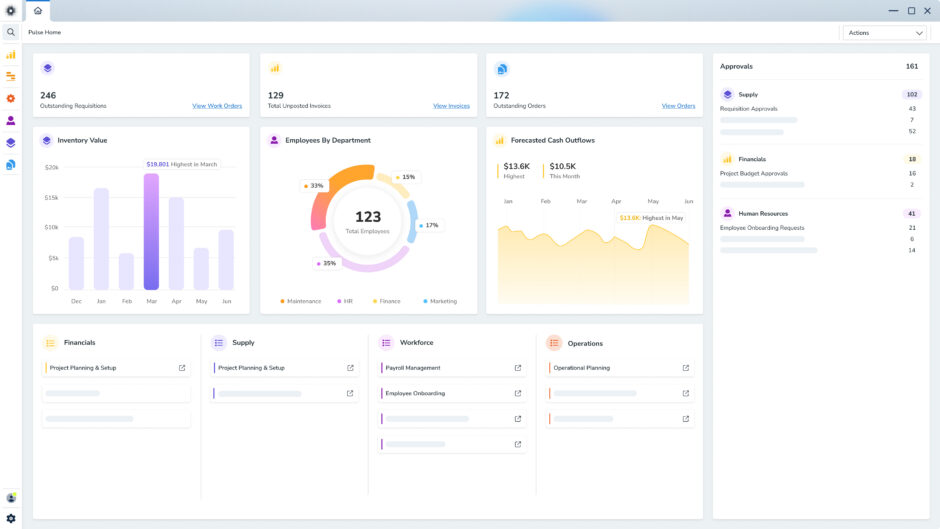
With intuitive dashboards, simple training tools, and time-saving automation, payroll software simplifies every step from time tracking to final payment.
Smart calculations handle PAYG tax, overtime, and deductions instantly, while integrations with attendance systems eliminate the need for manual data entry.
The result?
Fewer errors, faster processing, and more time for your HR or finance team to focus on other tasks.
Happier employees
Getting paid correctly and on time builds trust and boosts morale. Purpose-built software ensures consistent, reliable payments every pay cycle.
Many systems also include employee self-service portals, where staff can access payslips, tax summaries, and leave balances anytime.
This transparency reduces payroll queries, enhances satisfaction, and gives employees a sense of control over their information.
Real-time insights and reports
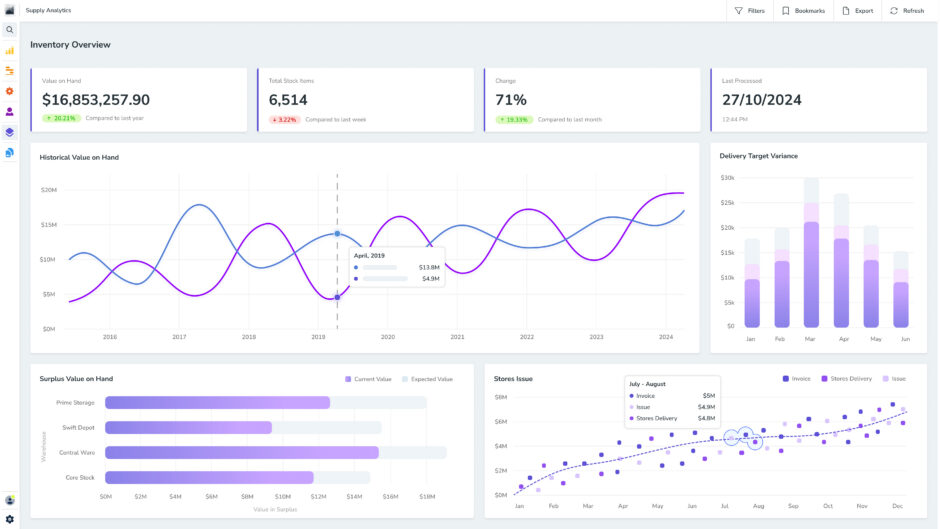
With software like Pulse, you’ll gain clear, detailed reporting that helps you understand your true labour costs and make smarter business decisions.
Generate real-time reports for compliance, audits, and financial forecasting, or track payroll trends to manage budgets more effectively. This visibility makes it easier to plan ahead, spot issues early, and stay on track financially.
Flexibility for every industry
No matter your sector — healthcare, retail, construction, manufacturing, or agriculture — payroll software can adapt to your business.
Modern systems like Pulse are flexible enough to handle different awards, rosters, and work patterns, making them suitable for any industry or workforce size.
Customisable features
Every business operates differently, and the best software is tailored to suit your exact needs. From personalised pay structures and bespoke reports to multi-location support for diverse taxation and regulatory requirements, these platforms make it simple to manage complex payroll setups.
You can configure systems to match your business rules, enterprise agreements, pay types, pay cycles and benefits packages, ensuring your payroll always aligns with how your organisation works.
Stronger data security
Payroll data contains sensitive information like employee addresses, tax file numbers, and bank details, so keeping it secure is non-negotiable.
Pulse payroll software uses advanced encryption, role-based access controls, and secure cloud storage to protect your data. It also maintains detailed audit trails, so every action is logged for full transparency and compliance.
Payroll process FAQs
Payroll is calculated by working out each employee’s gross pay, applying the correct tax, super, and deductions, and then arriving at their net pay — the amount that actually lands in their account.
The steps generally include:
- Reviewing employee hours, salary, or award entitlements
- Calculating gross pay (including overtime, allowances, and bonuses)
- Applying PAYG withholding, superannuation, and any other deductions
- Confirming leave accruals and benefits
- Issuing payslips and transferring net pay on payday
Accurate payroll calculations are crucial to meet Fair Work and ATO requirements. Even small mistakes can lead to underpayments, tax errors, or compliance issues, which is why most businesses now use STP-enabled payroll software to automate and simplify the process.
In Australia, the most common pay frequencies are weekly, fortnightly, or monthly. The Fair Work Act 2009 requires employers to distribute wages at least once a month, but you can choose a pay schedule that best suits your team and business operations.
Here’s how each option typically looks:
- Weekly: 52 pay runs per year — common for trades and casual roles
- Fortnightly: 26 pay runs per year — popular for most businesses
- Monthly: 12 pay runs per year — often used for salaried employees
Whichever frequency you choose should be clearly stated in each employee’s contract. Consistency is key, as reliable pay cycles build trust and help with budgeting for both the employer and employee.
The time it takes to process payroll depends on how it’s managed. Manual payroll — using spreadsheets or paper timesheets — can take hours or even days, especially for businesses with multiple employees or awards.
On the other hand, payroll software like Pulse can run calculations, apply tax and super rules, and submit STP reports in just minutes. Automated systems reduce errors, save time, and ensure every pay run meets ATO and Fair Work requirements.
A payroll processor is the person or system responsible for making sure everyone is paid correctly and on time. This can be an internal staff member, such as an HR or finance manager, or an external provider who offers outsourced payroll services.
Their role typically includes calculating pay, lodging Single Touch Payroll (STP) reports with the ATO, managing leave and superannuation, issuing payslips, and resolving any payroll-related queries.
In larger organisations, payroll processors also handle reporting, compliance checks, and audits to ensure everything meets Australian standards.
Streamline your payroll operations with Pulse Workforce
Managing payroll doesn’t have to be stressful or time-consuming. Understanding the fundamentals of Australian payroll is just the first step. The real advantage comes from using the right tools to simplify the process and stay compliant.
That’s where Pulse Workforce stands out. Designed for businesses of every size, this software streamlines every stage of the payroll process across various currencies and regulatory frameworks.
By providing tools for customised reporting setup and flexible pay group management, it empowers your team to:
- Automate complex payroll tasks and eliminate manual errors.
- Customise pay structures and reports to your team, industry, and award requirements.
- Manage multiple sites and flexible payroll cycles from one simple dashboard.
- Streamline rostering and award configuration with smart tools that align pay rates and schedules to organisational policies.
- Track employee positions with integrated position management tools.
- Capture timecard data using AI-powered attendance tracking integration.
- Access full payroll history and reporting for audits, analysis, and visibility.
- Manage payslips, leave, and more on the move with employee self-service tools.
- Comply with ATO, Fair Work, and superannuation regulations automatically.
Pulse Workforce also integrates with rostering, time tracking, and training systems, giving you complete visibility and control over your workforce in one place.
Ready to take the stress out of pay runs?
Request a free demo and see how Pulse Workforce can help your business save time, stay compliant, and keep your team thriving.