Businesses can’t afford guesswork when it comes to asset performance. Instead, an asset management plan sets out how your resources are developed, maintained, and optimised to deliver the greatest possible value.
This roadmap paves the way for financial stability, risk reduction, and long-term sustainability. But to truly work, it must be dynamic and data-driven, updating regularly as operations and investments evolve.
Not sure where to start?
Here, we explain how to develop an asset management plan, what it should include, and why it matters. Keep reading to learn how to handle assets effectively, boost operational efficiency, and curb costs.
What is an asset management plan?
An asset management plan (AMP) is a structured strategy that helps businesses utilise their assets — such as infrastructure, equipment, or property — as efficiently and sustainably as possible.
By detailing how each asset will be created, serviced, and improved over its life cycle, this plan gives leaders the clarity to make smart, informed decisions.
An AMP sets clear performance goals, highlights potential risks, and helps you prioritise actions so every dollar spent delivers real value. In essence, it connects day-to-day operations with your organisation’s big-picture objectives.
What should an asset management plan include?
An AMP is the practical playbook that turns asset strategy into action. To do this, it should include the following elements:
- Executive summary and scope – outlines the purpose of the plan and the types of assets it covers.
- Asset register and condition data – details every asset’s location, value, and current condition to create a clear picture of what you own and how it’s performing.
- Levels of service – defines measurable performance standards so you know what “good” looks like.
- Risk management – identifies potential failures or safety risks and how they’ll be managed.
- Lifecycle strategies – explains how assets will be maintained, upgraded, or replaced to achieve the best long-term outcomes.
- Financial forecasts – estimates future funding needs, ensuring your plan remains realistic and affordable.
- Performance monitoring – sets out how progress will be measured, reported, and improved over time.
Key to this structure is the ISO 55001:2024 standard, which provides a global guide for building and maintaining a strong AMP. It is the benchmark for businesses that want consistency, transparency, and best-practice governance.
Under ISO 55001:2024, an AMP should always:
- Clearly describe which assets are included, what purpose they serve, and why they matter.
- Outline performance, cost, and risk objectives that align with your organisation’s strategic goals.
- Assess current and forecast performance levels, identifying any gaps or risks.
- Detail the actions, timeframes, and resources required to close those gaps and control risks.
- Compare allocated and required budgets to ensure the plan remains achievable and transparent.
With these core components in place, your business can reap the benefits below.
The advantages of an asset management plan
An asset management plan (AMP) isn’t just a document that sits on a shelf — it’s a living strategy that helps organisations make smarter decisions, save money, and stay prepared for the future.
By mapping out the value, performance, and lifespan of your assets, an AMP gives everyone a shared, reliable view of what’s working, what needs attention, and where to invest next.
Let’s deep dive into each advantage of having an AMP.
Visibility over financial sustainability
A strong AMP gives you the foresight to understand not just what your assets cost now, but what they’ll cost to maintain, renew, and replace in the years ahead.
By forecasting maintenance schedules, upgrades, and renewals, organisations can budget with confidence and avoid the panic of unexpected breakdowns or surprise expenses.
Decision-makers gain a clear picture of trade-offs between service quality, investment, and affordability, ensuring every dollar is spent wisely.
Put simply, better planning means fewer financial shocks, steadier cash flow, and a stronger foundation for long-term sustainability.
Stakeholder support
When decisions are transparent, trust follows. A clear, well-structured AMP helps stakeholders — whether they’re board members, funders, or the general public — understand exactly how assets are managed and why certain decisions are made.
This clear communication helps secure ongoing support, whether that’s for new funding, adjusted service levels, or long-term projects. It turns uncertainty into confidence, showing everyone involved that your organisation is managing its assets responsibly and strategically.
Confidence in compliance
Regulations can be complex, but compliance doesn’t have to be. With a complete AMP, you have one organised record of all asset data, from acquisition and maintenance through to disposal.
This centralised approach simplifies audits, ensures financial reporting accuracy, and demonstrates your commitment to solid governance.
Long-term sustainability
Short-term fixes might save money now, but they can cost far more later. An AMP helps organisations take a more proactive approach, balancing immediate needs with future priorities.
It keeps sustainability front of mind, ensuring your investments support lasting value, efficient operations, and responsible use of resources.
By making decisions based on long-term outcomes, not short-term pressure, your business can build resilience that endures for decades.
Less risk of disruption
Knowing your assets means knowing your risks. Whether it’s ageing infrastructure, environmental threats, or capacity limits, a detailed AMP gives you the insight to spot potential issues early and take action before they impact service delivery.
With preventative maintenance, upgrades, and replacements, you can avoid costly downtime, protect public safety, and ensure your organisation continues delivering at its best, no matter what challenges arise.
Identify efficiencies
Efficiency is the quiet superpower of a strong AMP. By tracking every asset through its lifecycle, organisations uncover smarter ways to allocate resources, schedule maintenance, and reduce waste.
In turn, that means less reactive work, fewer emergency callouts, and more predictable spending.
Over time, this approach not only saves money but also boosts productivity, helping teams work more efficiently without sacrificing quality.
Greater agility
Change is inevitable, and with an AMP, you’re ready for it. As technology evolves, regulations shift, or budgets tighten, this plan helps you stay informed and adaptable.
It gives you the flexibility to adopt new tools, improve asset visibility, and make better decisions based on real data.
Whether you’re upgrading old systems or introducing smarter technologies, an AMP helps keep your organisation flexible and competitive.
How to create an effective asset management plan
1. Take stock of your assets
Start by documenting every asset you own. Accuracy here sets the foundation for everything that follows.
For each asset, record:
- Value — its financial worth and replacement cost.
- Quantity — how many units exist.
- Location — where it’s stored or used.
- Acquisition date — when it was purchased or commissioned.
- Expected lifecycle — how long it will perform before major renewal or replacement.
This asset inventory provides the baseline for your entire plan.
2. Understand each asset’s lifecycle
Go beyond upfront costs. Consider the total cost of ownership, including maintenance, operation, and eventual disposal.
Understanding the full lifecycle helps identify when and how to reinvest to maximise value and minimise downtime.
3. Set your levels of service
Define what “good performance” looks like. Your levels of service (LoS) outline how each asset class supports your community, customers, or operations.
These targets should be realistic, measurable, and aligned with both your strategic goals and stakeholder expectations.
4. Translate strategy into action
Use your organisation’s strategic plans and policies to shape clear asset management objectives.
Then, build or review your Strategic Asset Management Plan (SAMP) — this document links wider organisational goals to practical, asset-level actions.
From there:
- Draft measurable asset management objectives that connect strategy to delivery.
- Define LoS targets by asset class and feed these back into each plan.
- Analyse risks, lifecycle costs, and performance gaps to identify priorities.
- Convert findings into actionable programs — from maintenance and upgrades to renewals and disposals.
5. Align with corporate frameworks
Your AMP should integrate seamlessly with your organisation’s broader governance systems, including:
- Financial management: align asset funding with long-term financial plans.
- Risk management: identify, assess, and mitigate asset-related risks.
- Project management: ensure approved investments are delivered on time, within scope, and on budget.
This alignment ensures asset decisions are financially sustainable, strategically justified, and fully transparent.
6. Review, refine and repeat
Asset management isn’t a “set and forget” process. Revisit your plan regularly. Updating demand forecasts, service levels, and performance data as circumstances change.
This continuous improvement cycle keeps your AMP relevant, reliable, and ready to respond to new challenges.
7. Maintain clear document hierarchy
Traceability is key. That’s why there should always be direct links from policy → objectives → SAMP → AM objectives → LoS → analysis → actions → investments → delivery frameworks.
This well-defined structure ensures every decision can be tracked, justified, and improved over time.
H2: How asset management software helps
Asset management software has transformed how organisations plan, maintain, and optimise their assets. It centralises information, automates reporting, and provides real-time data — empowering teams with clearer insights and more time for stronger decision making.
Let’s take a look at each of the benefits that Pulse Maintenance can bring to your business.
Improved productivity
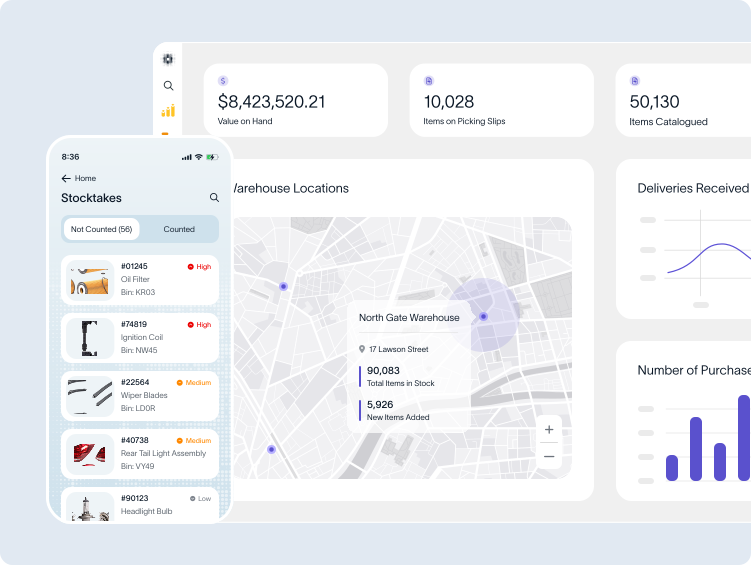
With Pulse Maintenance, technicians gain mobile access to job details, digital checklists, and live updates. That means more streamlined workflows and less paperwork.
Meanwhile, the software’s job management tools bring everything together — from planning and scheduling to execution, history tracking, and performance analysis — giving you complete visibility and control over maintenance activities.
Moreover, preventive maintenance tools help identify and resolve issues before they cause downtime, keeping operations running smoothly.
Together, these features can boost productivity, reduce downtime, and foster a more proactive maintenance culture.
Cost savings
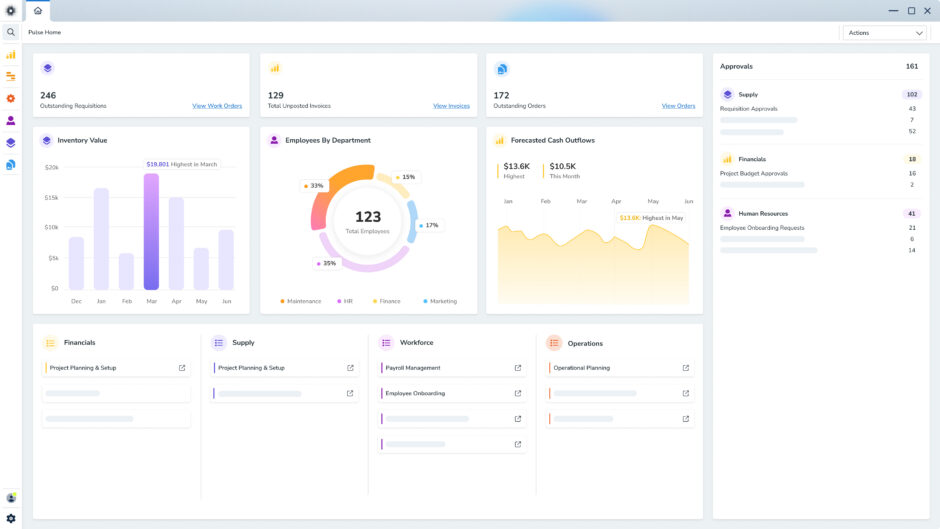
When financial and operational data live in the same ecosystem, every dollar spent is accounted for. Pulse Maintenance integrates seamlessly with Pulse Financials, delivering a single source of truth for maintenance costs, depreciation, and asset tax reporting.
By blending maintenance, financial, and ERP data, teams can track spending in real time, forecast budgets more accurately, and make informed investment decisions.
Our clients report measurable savings through better inventory control, reduced overtime, and smarter resource allocation — all leading to improved cost efficiency across the board.
Superior safety and compliance
Compliance and safety don’t have to slow you down. With Pulse, employees can access checklists, documentation, and step-by-step workflows on their mobile devices, even offline.
That way, critical procedures are followed consistently and correctly, wherever the job takes your team. The result is fewer errors, faster reporting, and stronger compliance outcomes.
Increased visibility into maintenance activities also means you can identify potential hazards early and help prevent safety incidents.
Stronger planning and forecasting
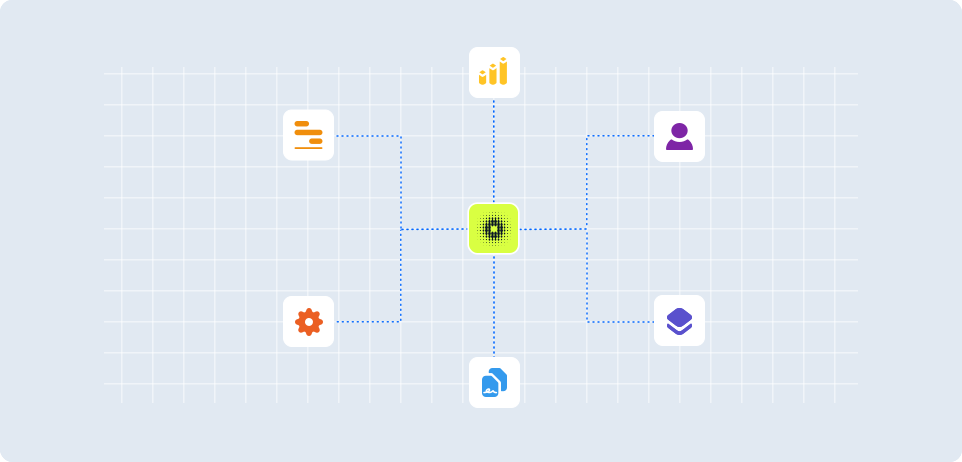
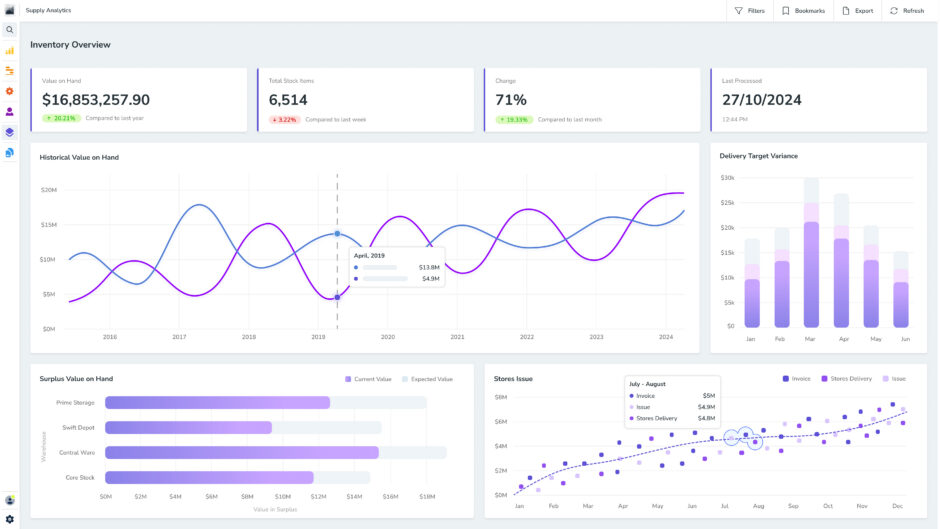
Reliable planning starts with reliable data. Pulse Maintenance integrates with Pulse Analytics’ visualisation and reporting tools to help you make informed, data-driven decisions about maintenance strategies, timelines, and resource allocation.
With accurate forecasting and automated scheduling — whether calendar-based or usage-based — you can optimise asset maintenance, coordinate tasks with business goals, and eliminate guesswork from future budgeting.
Smoother asset lifecycle management
Effective asset management doesn’t stop at maintenance. Pulse integrates asset performance, maintenance history, and financial data across the Pulse platform to give you a complete lifecycle view.
This unified approach helps extend asset life, reduce replacement costs, and improve long-term sustainability.
By combining financial insight with operational performance, you gain the visibility to plan smarter, maximise asset value, and drive the overall success of your business.
FAQs
ISO 55001 provides the global standard for how organisations should develop, implement, and improve an asset management system.
It relates directly to asset management planning by setting out the framework for creating, reviewing and continuously improving your AMP.
By aligning your AMP with ISO 55001, you ensure that:
- Asset decisions support organisational objectives.
- Risks and lifecycle costs are consistently managed.
- Data, performance, and investment priorities are evidence-based.
- Continuous improvement is built into the process.
Australian councils, utilities and infrastructure owners often use ISO 55001 alongside the IPWEA International Infrastructure Management Manual (IIMM) to demonstrate governance, transparency and financial responsibility.
Asset management planning is a shared responsibility that relies on technical, financial, and executive teams working together.
Usually, asset managers, engineers, and financial planners take the lead in developing an AMP, while executive management ensures alignment with broader business strategy and funding priorities.
Ultimately, the CEO, general manager, or board is accountable for approving the AMP and delivering the resources to succeed.
You should review your AMP every three to five years, or sooner if there are major changes in your assets, budgets, or service levels.
Regular reviews keep your plan accurate, relevant, and compliant with changing standards like ISO 55001 and state-based frameworks like Integrated Planning and Reporting (IP&R) in NSW.
Each AMP review should include:
- Updating asset condition and performance data.
- Reassessing lifecycle costs and risk profiles.
- Reviewing service levels and stakeholder expectations.
- Aligning financial forecasts with current funding.
- Documenting improvements and lessons learned.
These reviews will help your business stay proactive, enabling you to cut maintenance costs, extend asset life, and align performance with growth.
When it comes to asset management planning, you’ll want to start simple and build over time. The key is to create a scalable framework based on what you already know about your assets.
Here’s how to get your AMP off the ground:
- Create an asset register — list all physical assets, their condition, and location.
- Identify critical assets — focus on those essential for safety, compliance, or service delivery.
- Set basic service levels — define what performance your community or customers expect.
- Estimate lifecycle costs and risks — understand when maintenance or replacement is needed.
- Use local templates — IPWEA’s NAMS.PLUS tools or local government guidelines make it easy to document your plan.
Even a simple plan will aid transparency, bolster budgeting, and lay the foundation for a future ISO 55001-aligned system.
The biggest mistake a business can make when developing an asset management plan is focusing on compliance instead of outcomes. That’s because a well-structured plan isn’t just a document; it’s a decision-making tool.
To avoid common pitfalls:
- Link data to action: Use condition, cost, and risk data to drive priorities.
- Engage stakeholders: Get input from finance, operations, and end users early on.
- Keep it dynamic: Regularly update your plan as assets, funding, and technology change.
- Integrate with finance: Align asset planning with your long-term financial plan and budgets.
- Embed improvement: Treat the plan as a living strategy, not a once-off report.
Avoiding these downfalls turns your AMP into a valuable asset in itself — one that improves performance, reduces costs, and helps meet audit, compliance, and stakeholder expectations.
Streamline asset management with Pulse
An effective AMP keeps everyone from finance to operations working toward the same goal: getting the most out of every asset while managing risk responsibly.
Action your AMP seamlessly with Pulse Maintenance. This customisable software module helps you plan tasks with ease, assign the right resources, and keep track of progress without the spreadsheets or guesswork.
Create tailored maintenance plans, schedules, and checklists for unique assets, operational requirements, and industry standards. With accurate analytics and automated parts management, you’ll always know what’s happening, what’s needed, and what’s next.
Gain the clarity to make strategic maintenance decisions and the confidence that everything’s running as it should. Request a free demo.