In production, timing is critical. Raw materials need to arrive, machines must be ready to run, and orders have to meet delivery deadlines. When any part of that chain falls out of sync, it impacts costs, performance, and customer satisfaction.
Keep tasks on track with a clear production schedule. By aligning demand with capacity, setting clear priorities, and using resources where they add the most value, this strategic tool helps you maximise productivity.
In this guide, we explain how to create an efficient production schedule and why it’s so important for your business. Keep reading to learn the key steps, techniques, and best practices.
What is a production schedule in manufacturing?
A production schedule is a detailed timeline that maps out exactly what needs to be produced and when. Aligning customer demand with available capacity, it helps producers sequence jobs, allocate resources, and meet delivery deadlines.
At its core, a production schedule answers three key questions:
- What needs to be made? The components and required quantities.
- When will it be made? Start dates, finish dates, and how long tasks will take.
- Where and how will it be made? The raw materials, machines and labour.The goal of a production schedule is to ensure work flows in the right order and at the right time.
Essentially, it acts as the day-to-day game plan for your manufacturing operation, giving your team clear direction on what to prioritise.
This clarity makes it easier to respond to changes, maintain output, and keep the entire production process running smoothly.
The difference between production planning and scheduling
Production planning and production scheduling work hand in hand, but they serve different roles. Planning focuses on the wider production strategy, whereas scheduling focuses on timing, sequencing, and task allocation.
More specifically, production planning sets out what you’re going to make, how you’ll make it, and what resources you’ll need to meet demand. This includes forecasting orders, assessing production capacity, and securing inputs like raw materials, labour, and equipment.
Production scheduling focuses on executing that plan. It defines when each task happens, in what order, and who or what is responsible. This is where timeframes, job sequencing, and machine allocation are locked in.
You need both working together to avoid delays, maximise efficiency, and keep production on track.
The production scheduling process
A strong production schedule is built by aligning demand, capacity, and timing, then adjusting as conditions change.
While every operation runs differently, you can use the proven process below as a general guide to get started.
1. Define production goals
Start by getting specific about what success looks like.
Are you trying to:
- Deliver all orders on time?
- Reduce overtime or labour costs?
- Increase output without adding new equipment?
- Clear a backlog or prepare for a busy season?
Your goal shapes every decision that follows. For example, if your priority is on-time delivery, you’ll build your schedule around deadlines. If it’s efficiency, you’ll focus more on maximising machine use and reducing downtime.
A clear objective keeps your schedule focused and prevents conflicting priorities.
2. Forecast customer demand
Customer demand is rarely static. It shifts based on seasonality, buying behaviour, market conditions, and even external factors like supply chain disruptions or economic changes. If you don’t account for this, your schedule will either fall short or create unnecessary excess.
To build a full picture of future customer demand, combine multiple data sources:
- Confirmed orders: Your most reliable baseline, with fixed quantities and delivery dates
- Historical sales data: Reveals patterns, repeat cycles, and market trends
- Seasonal demand and spikes: Such as peak periods, industry cycles, or weather-driven demand
- Sales pipeline and upcoming promotions: Expected demand that hasn’t yet converted into orders
From there, refine your forecast by breaking demand down into actionable detail:
- Product types or SKUs: To clarify exactly what needs to be produced
- Required quantities: To align output with actual needs
- Delivery timeframes: To ensure production is sequenced correctly
Equipped with this level of detail, you can move beyond rough estimates and build a schedule that can help you meet customer demand.
Remember that demand should be reviewed regularly as new orders come in, forecasts change, and market conditions shift.
The more responsive your demand planning is, the more accurate and reliable your production schedule will be.
3. Calculate production capacity
Now compare demand with what your operation can actually handle.
Look closely at factors like:
- Machine availability (including maintenance downtime)
- Workforce size, skills, and shift patterns
- Raw materials and supplier lead times
- Current work in progress
If you don’t think you have the capacity to deliver what’s required, you’ll need to adjust. That might mean spreading work more evenly across shifts, reducing bottlenecks on key machines, or outsourcing part of production.
4. Set your production budget
With your demand and capacity mapped out, you can start making smarter calls about what gets produced first and how much it will cost you.
Start by building a clear production budget. At a minimum, this should account for:
- Labour costs across shifts and roles
- Machine and operating costs, including energy and maintenance
- Material usage, based on your planned output
- Target production volumes for the period
This gives you a pragmatic view of what it takes to deliver your schedule, and where margins can be protected or improved.
At the same time, you need to decide what actually deserves priority. Not all jobs are equal, and treating them that way can stretch your team and hurt performance.
Rank your workload based on what matters most to the business, such as:
- Tight delivery deadlines that can’t be missed
- High-value customers or orders
- Contractual commitments with penalties or long-term impact
- Inventory levels, especially for fast-moving or low-stock items
Some jobs will need to move to the front of the queue, while others can wait.
Getting this balance right keeps your time, labour, and equipment focused on the work that drives the most value, instead of being spread too thin across everything at once.
5. Map production routing
Production routing defines exactly how a product moves through your operation, from raw materials to a finished, ready-to-ship item.
When this step is approached properly, it removes guesswork, boosts accuracy, and makes your entire schedule easier to execute.
Start by mapping the full journey of each product. Break the process down into clear, logical steps and document:
- Every stage of production, from preparation through to assembly, finishing, and packing
- The correct order of those steps, including what must happen first and what can run at the same time
- The machines, workstations, and tools required at each stage
- Who is responsible, especially where specific skills are needed
- How long each step actually takes, including setup and changeover time
- Any dependencies, where one task can’t begin until another is complete
As you build this out, don’t just map the process; look for ways to improve it. Pay close attention to:
- Bottlenecks, where one machine or stage is slowing everything else down
- Recurring delays, where work tends to sit idle or queue up
- Unnecessary movement, where materials are handled or transported more than needed
- Opportunities to simplify, combine, or streamline steps
This is where you’ll often find quick wins that improve output without needing more resources.
A well-defined routing plan gives you a much clearer picture of how your operation runs. It allows you to predict production times more accurately, reduce downtime between steps, and keep work flowing consistently.
The key is to keep it updated. As processes improve or equipment changes, your routing should evolve with it, helping you build a production system that becomes more efficient over time.
6. Schedule production tasks
This is the point where every job is placed in time, with clear ownership and sequencing.
Using your routing and capacity data, lock in the details:
- Start and finish times for each job
- Work centres and machines required
- Operators or teams responsible
- Task dependencies, so it’s clear what must happen first
Then you can build a schedule that holds up in practice.
Sequence the work smartly. Group similar jobs to cut down changeovers. Pull forward urgent or high-value orders so they don’t get stuck behind lower-priority work. And keep a close eye on bottlenecks. If one machine or team is overloaded, the whole schedule will slip.
You’ll also need to be realistic with timing. Factor in:
- Setup and changeover time
- Planned maintenance
- Small buffers for delays and disruptions
By the end of this step, you should have a schedule that’s clear, structured, and practical. Your team should be able to look at it and instantly understand what’s being produced, where it’s happening, and exactly when it needs to be done.
7. Dispatch and execute
Once your production schedule has been finalised, it needs to move off the screen and onto the site.
Dispatching is that handover point. It involves making sure every job is released in the right order, with clear instructions, and with everything in place to start immediately.
From there, jobs are executed in the planned sequence, keeping to the expected pace, and maintaining quality at every stage.
When this is done well, production flows. When it’s not, small gaps quickly turn into delays. What makes the difference is visibility and communication.
Your team needs to know what’s happening now, what’s coming next, and where the priorities sit. At the same time, any issues, whether it’s a machine delay or a missing material, need to be flagged early and dealt with quickly.
Ultimately, a schedule only works if people can understand and act on it without hesitation. Keep things clear, visible, and easy for your team to stay on track.
8. Review and refine regularly
A production schedule isn’t set and forget. It requires ongoing attention, regular reviews, and timely adjustments to stay accurate and effective.
Keep a close eye on performance and address minor issues before they escalate. Routine equipment maintenance plays a key role here, helping you avoid unexpected breakdowns that can disrupt your entire schedule.
At the same time, stay flexible enough to respond to real-world changes, whether that’s a material shortage, a supplier delay, or a sudden shift in demand.
By continuously refining your approach, you can stay responsive to changing conditions and ensure your schedule always reflects what’s happening right now.
Production scheduling techniques
There’s no one-size-fits-all way to schedule production. The best approach depends on your capacity, demand patterns, and how much flexibility your operation has.
Most manufacturers don’t stick to just one method either. They combine techniques to stay efficient while still meeting delivery commitments.
Here are the most widely used production scheduling methods to choose from.
Forward scheduling
Best for: Stable demand and high utilisation
Focus: Keeping machines and teams productive
Outcome: Jobs are completed as soon as capacity allows
Forward scheduling starts production as early as possible and pushes work through the system based on available resources. This method helps maximise output and reduce idle time.
The trade-off is flexibility. Because your schedule fills up quickly, it can be harder to squeeze in urgent or last-minute orders. Delays early in the process can also push everything else back.
Backward scheduling
Best for: Deadline-driven production
Focus: Hitting delivery dates
Outcome: Tighter control over lead times
Backward scheduling works in reverse. It starts with the delivery deadline and plans production backwards to determine when work must begin.
This approach is ideal when on-time delivery is vital. It highlights bottlenecks early and keeps teams aligned to a fixed end date. The downside is there’s less room for error. You need accurate, real-time data to avoid delays.
Just-in-time scheduling
Best for: Lean manufacturing environments
Focus: Reducing waste and excess inventory
Outcome: Lower holding costs and improved efficiency
Just-in-time (JIT) scheduling means producing only what’s needed, when it’s needed. Materials arrive just before they’re required, and production is triggered by actual demand, not forecasts.
While JIT can significantly cut costs, it relies on strong supplier relationships and precise coordination to avoid disruptions.
Make-to-stock scheduling
Best for: Consistent, predictable demand
Focus: Maintaining stock levels
Outcome: Faster fulfilment for customers
The make-to-stock approach focuses on producing goods ahead of demand and storing them as inventory. Production is scheduled based on inventory thresholds. When stock drops, new production orders are triggered.
This method works well for retail and high-volume products, but can lead to overstock if you misjudge customer demand.
Finite capacity scheduling
Best for: Operations with limited capacity
Focus: Realistic scheduling
Outcome: Sustainable production
Finite capacity scheduling arranges production around available resources. This method ensures you don’t overload machines or staff. As every job is scheduled within real constraints, it’s easier to meet deadlines consistently.
While this technique is especially useful for small to mid-sized manufacturers, it requires accurate, up-to-date data to work properly.
Infinite capacity scheduling
Best for: Long-term planning and forecasting
Focus: Meeting demand at a high level
Outcome: Insight into future capacity needs
Infinite capacity scheduling plans production without factoring in resource limits. This approach assumes resources are always available, which makes it useful for strategic planning and growth modelling.
On its own, it’s not practical for day-to-day operations, so it’s often paired with finite scheduling to balance planning with reality.
The benefits of production scheduling
An effective production schedule brings structure, visibility, and control to your entire operation. Let’s take a look at each benefit.
Lower production costs
Production scheduling helps you control costs before they escalate.
- By planning work in advance, you avoid:
- Last-minute material orders with premium freight costs
- Overtime caused by poor sequencing
- Idle machines or underutilised labour
It also ensures materials and equipment are used at the right time, not too early and not too late. The result is a more predictable cost base and fewer unexpected expenses cutting into your margins.
Fewer bottlenecks
Bottlenecks are one of the main causes of production delays. A clear schedule helps you identify pressure points before they become problems.
By mapping out the sequence of work and allocating resources properly, you can:
- Spot overloaded machines or teams early
- Balance workloads across your operation
- Reduce queueing and idle time between tasks
Instead of reacting to delays, you’re proactively preventing them. This helps to avoid disruptions that could impact delivery timelines.
Smoother production processes
A production schedule gives your operation a clear structure and rhythm. Every stage of the process is arranged logically, including what needs to happen, in what order, and when it needs to be completed.
This clarity removes confusion and keeps work flowing from one stage to the next. When everyone understands the plan, production becomes more consistent, predictable, and easier to manage.
Efficient resource allocation
One of the main benefits of production scheduling is how much better it allows you to use the resources you already have.
When your schedule is planned properly, everything is used with intent. Labour is assigned where it adds the most value, machines are kept running without unnecessary gaps, and materials arrive when they’re actually needed, not sitting idle or arriving too late.
It also helps remove hidden inefficiencies. By sequencing work properly, you reduce waiting time between tasks and cut down on constant changeovers. Small improvements like these add up quickly across a full production cycle.
In the end, you’ll be able to produce more, with less waste, and without needing to invest in additional equipment or labour.
Better inventory management
By aligning production with real demand, you can avoid the common traps that harm both operations and cash flow. Stockouts become far less likely, which means production keeps moving, and orders aren’t delayed.
At the same time, you’re not overproducing or over-ordering, so you avoid tying up money in excess inventory that just sits in storage.
It also puts you in a stronger position to plan ahead. You can time reorders more accurately, maintain appropriate safety stock levels, and respond faster when demand shifts or supply issues arise.
Overall, better scheduling gives you greater visibility over how materials are used, helping you stay efficient, responsive, and in control of your inventory.
Stronger communication
A clear production schedule brings your entire team onto the same page. It sets out what needs to be done, when it needs to happen, and who owns each task, so there’s no ambiguity.
This level of clarity improves coordination between teams and reduces miscommunication, especially when multiple departments are involved.
It also creates a natural sense of accountability, making it easier to track progress, spot issues early, make strategic decisions and keep work moving.
Key factors to consider when scheduling production activities
Production scheduling is far more manageable when you focus on the key factors that impact performance. Each of the elements below plays a role in how precise, efficient, and reliable your schedule will be.
- Product complexity: More complex products require more steps and coordination. Break them into smaller stages to make scheduling, tracking, and execution easier.
- Workforce planning: Ensure you have the right number of people with the right skills at each stage. Good planning avoids both labour shortages and idle time.
- Materials and inventory: Keep production aligned with available stock. Monitor inventory levels, reorder points, and supplier reliability to avoid delays or excess stock.
- Lead times: Account for supplier delivery times, internal production durations, and dispatch timelines. Accurate lead times are essential for building a schedule that holds up in practice.
- Workflow and layout: Consider how materials and products move through your facility. Efficient layouts reduce handling time and keep production flowing smoothly.
- Quality control: Include time for inspections, testing, and rework. Maintaining quality throughout production prevents costly issues later.
- Task sequencing and dependencies: Plan the order of work carefully. Group similar jobs, run tasks in parallel where possible, and align dependent steps to minimise delays.
- Real-time visibility and control: Track progress as work happens. Visibility over jobs, delays, and resource availability allows you to make fast, informed adjustments.
- Flexibility: Build room for change. Delays, shortages, and shifting demand are inevitable, so your schedule needs buffer time and the ability to adjust quickly.
- Continuous problem solving: Expect disruptions and plan for them. Identifying and resolving issues early helps keep production on track and improves future scheduling.
- Documented processes: Standardise your scheduling approach. Clear documentation improves consistency, supports training, and makes troubleshooting easier.
How production scheduling software can help
As production becomes more complex, spreadsheets and paperwork start to fall short. They struggle to keep up with changing demand, shifting capacity, and real-time disruptions.
Today, modern businesses are harnessing advanced production scheduling tools to improve control, visibility, and speed of decision-making.
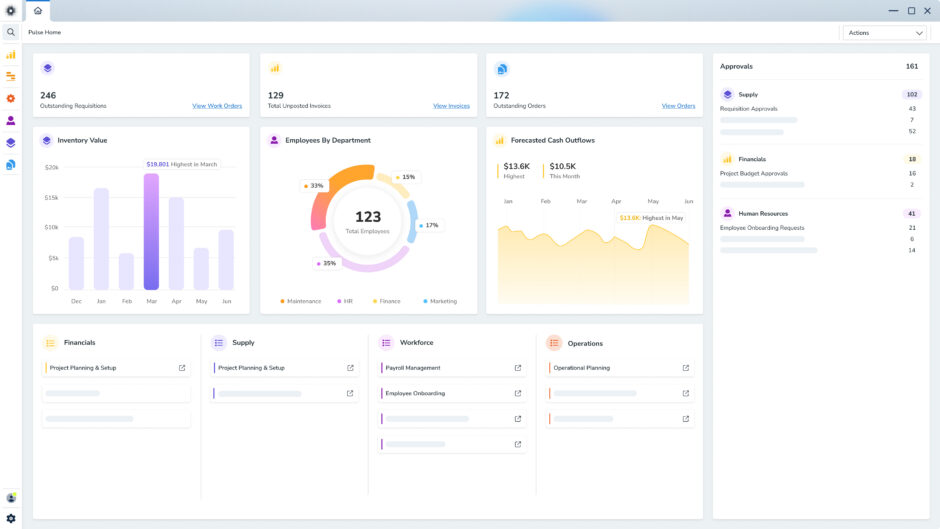
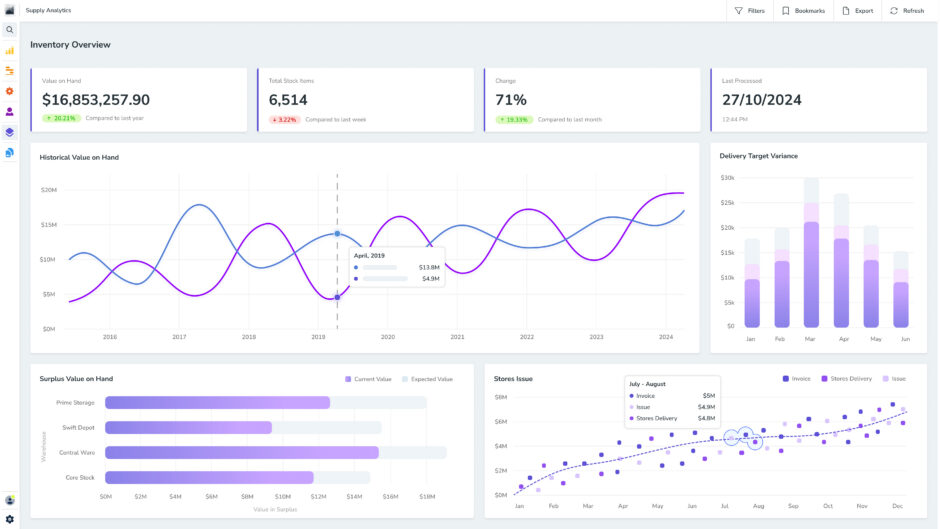
For example, Enterprise Resource Planning (ERP) systems like Pulse connect data across supply, workforce, production, and maintenance, helping you build practical schedules that are grounded in reality and can adjust as conditions change.
When production scheduling is fully integrated into your ERP, fluctuations in demand, inventory, or supply flow straight through to your schedule automatically.
Key benefits of this technology include:
- Real-time visibility: See what’s in progress, what’s at risk, and where delays are forming. These instant insights help you act early and stay in control.
- Capacity-based scheduling: Plan work based on actual machine, labour, and material availability, not assumptions, reducing overload and missed deadlines.
- Faster, smarter adjustments: When conditions change, like a late delivery or equipment issue, the system can quickly re-sequence jobs and update production timelines without starting from scratch.
- Scenario planning: Test different production options before committing, so you can make confident decisions around demand changes, new orders, or capacity constraints.
- Less manual work, fewer errors: Automate data updates and scheduling logic, reducing reliance on spreadsheets and minimising costly mistakes.
- A single source of truth across your business: With different departments working from the same data, you can reduce miscommunication and improve coordination.
Overall, you can make faster, more informed decisions, keep tasks aligned without manual admin, and run a more efficient, predictable, and agile operation.
FAQs
A Master Production Schedule (MPS) is a high-level plan that outlines what finished products will be made, how many, and when over a set period.
It sits between planning and execution, turning broad forecasts into specific, actionable production targets.
In practical terms, an MPS:
- Breaks overall demand into individual products or SKUs
- Sets production quantities for each time period
- Aligns sales forecasts, inventory levels, and production capacity
- Feeds into systems like EPP platforms to trigger material and resource planning
For producers, this master schedule acts as the single source of truth for production. It ensures your sales team’s commitments are achievable, inventory is controlled, and frontline workers know exactly what needs to be delivered and when.
Detailed production schedules turn plans into reliable, on-time output. This helps you:
- Reduce downtime and bottlenecks by sequencing work properly
- Improve on-time delivery and meet customer expectations
- Maximise labour and machine utilisation
- Control inventory levels and avoid overproduction
- Increase visibility across your entire operation
It also protects your bottom line. Poor scheduling leads to wasted materials, idle time, and costly delays. Effective scheduling, on the other hand, compounds efficiency gains across every stage of production.
A production schedule should include all the details needed to plan, run, and control production effectively. At a minimum, it should cover:
- Production demand and volume: The products to be made, quantities required, and when they’re needed.
- Timelines and deadlines: Clear start and finish dates for each job, aligned with delivery commitments and realistic lead times.
- Tasks and process steps: A breakdown of the production process, including the sequence of operations and how work flows from one stage to the next.
- Resource allocation: The machines, labour, and materials required for each task, along with available capacity.
- Responsibilities: Who is responsible for each stage, ensuring accountability and reducing confusion during execution.
- Lead times: Time required for procurement, production, and delivery, so the schedule reflects real-world constraints.
- Inventory and materials: Current stock levels, material requirements, and availability to avoid delays or shortages.
- Costs and budget: Estimated production costs, including labour, materials, and overheads, to maintain profitability.
- Buffers and flexibility: Allowances for maintenance, delays, or unexpected disruptions to keep production moving.
Tracking the right Key Performance Indicators (KPIs) helps you understand whether your schedule is working and where it needs improvement.
The most useful production scheduling KPIs include:
- On-time delivery rate: Measures the percentage of orders delivered as promised. This is one of the clearest indicators of scheduling success.
- Cycle time: Tracks how long it takes to produce a product from start to finish. Shorter, consistent cycle times usually point to better efficiency.
- Production efficiency: Compares actual output to planned output. It shows whether you have made a realistic production schedule.
- Capacity utilisation: Measures how much of your available production capacity is being used. It helps identify underuse or overload.
- Downtime: Captures how much time machines or labour are not productive. Reducing downtime has a direct impact on output and cost.
- Waste or scrap rate: Shows how much material is lost during production. Lower waste indicates better control and efficiency.
- Overall performance against targets: Looks at whether production is meeting expectations across output, quality, cost, and delivery.
These KPIs give you a clear, measurable way to evaluate performance, spot issues early, and continuously improve your production schedule.
Even well-run operations run into issues with production scheduling. Most problems come back to poor visibility, inaccurate data, or a lack of flexibility.
Some of the most common mistakes include:
- Poor demand forecasting: Leading to overproduction or stockouts that impact cash flow and service levels
- Ignoring real capacity limits: Overloading machines or teams and creating avoidable bottlenecks
- Working from outdated or incorrect data: Resulting in schedules that don’t reflect what’s actually possible
- Inefficient sequencing of work: Causing unnecessary downtime, changeovers, and delays
- Rigid schedules that can’t adapt: Making it difficult to respond when conditions change
- Disconnected systems or communication gaps: Leaving teams out of sync and working on different priorities
On top of this, external disruptions like supplier delays, equipment failures, or sudden demand changes can quickly throw a schedule off track.
Streamline production scheduling with Pulse
A well-structured production schedule turns demand into a clear, actionable plan. You’ll be able to use resources more effectively, stay on top of changing conditions, and consistently deliver on customer expectations.
Take the stress out of scheduling with the Pulse Production ERP module.
Designed to support mining, agricultural, and manufacturing companies, this production management software drives peak efficiency with real-time data, automated workflows and intuitive scheduling tools.
Whether you’re managing a single site or multiple locations, gain the control, visibility and flexibility needed to keep production moving.