As businesses grow, strategic decisions become more critical and more challenging to get right. Without a clear understanding of the organisation’s financial health, leaders, investors and regulators have little data to inform direction, spending, or compliance.
Financial reporting solves this problem by turning everyday financial activity into structured insights. Showcasing key information about revenue, expenses, and cash flow, it shows exactly where your business stands and where it’s heading.
In this guide, we’ll explain what financial reporting is, why it matters, and what steps to take. Keep reading to learn about the different types of financial reports and how they help stakeholders make the next move.
What is financial reporting?
Financial reporting is the process of recording, analysing and presenting a business’s financial position over a set period of time. It shows where money is coming from, how it’s being spent and what that means for the organisation’s trajectory.
This information is shared via several financial statements that bring together key data like revenue, expenses, profit, assets, liabilities and cash flow.
The goal is to provide a clear and reliable picture of a company’s financial health so stakeholders can make informed business decisions.
For instance, business owners and executives rely on this reporting to monitor performance, spot potential risks early and guide strategic direction.
Meanwhile, investors and lenders analyse financial reports to assess financial strength and determine whether the business is a sound investment or lending opportunity.
At the same time, regulators review these reports to ensure organisations comply with accounting standards and taxation requirements.
Different types of financial reports
Financial reporting is built on four types of financial statements: the balance sheet, income statement, cash flow statement, and statement of changes in equity.
Together, these financial documents give a complete picture of your company’s performance and potential.
Let’s take a look at each one.
Balance sheet
A balance sheet captures the company’s financial position at a single moment in time. It details what the business owns, what it owes and the value held by its owners or shareholders.
This report is built around the fundamental accounting equation:
Assets = Liabilities + Equity
Assets represent resources the company owns that have economic value. These may include current and fixed assets, such as cash, Accounts Receivable, inventory, property, equipment and intellectual property.
Liabilities represent financial obligations such as loans, accounts payable, taxes payable and wages owed.
Equity represents the remaining value after liabilities are deducted from the company’s assets, clarifying the owners’ or shareholders’ stake in the business.
This formula helps answer key questions such as whether the business is financially stable, how much debt it carries and whether it has enough assets to cover its obligations.
Income statement
The income statement, also called the profit and loss (P&L) statement, shows how much money a company earned and spent over a specific accounting period.
This report starts with revenue and subtracts operating costs and other expenses to calculate the company’s net profit or loss.
Key elements typically include:
- Revenue from selling products or services
- Cost of goods sold (COGS) or direct production costs
- Operating expenses such as salaries, rent and marketing
- Non-operating income or expenses, such as interest or investment returns
- Net profit or loss after all expenses are deducted
Essentially, the income statement provides insight into the company’s profitability and operational efficiency. You can compare income statements across months, quarters or years to evaluate business growth and reveal trends in revenue or expenses.
Cash flow statement
The cash flow statement tracks how cash moves into and out of the business during a given period. Unlike the income statement, which measures profitability, the cash flow statement focuses purely on actual cash movement.
This report divides business activities into three key components:
- Operating activities: Cash generated from everyday business operations, such as customer payments and supplier costs
- Investing activities: Cash used for or earned from investments, like buying or selling assets
- Financing activities: Cash received from or paid to investors and lenders, including loans, dividends or share issuance
These figures help businesses understand their liquidity, or the ability to meet short-term obligations.
You can use the report to understand whether you generate enough cash from the company’s operations to cover expenses, repay debt and invest in future growth.
Statement of changes in equity
The statement of changes in equity explains how a company’s ownership value changes over time.
Common factors that affect shareholder equity include:
- Net profit or loss from the income statement
- Dividend payments to shareholders
- New capital invested by owners or shareholders
- Share buybacks or stock issuance
- Other comprehensive income, such as unrealised gains or losses
While often overlooked, this report provides important insight into how value is created and distributed within a company. Investors and shareholders use it to understand how profits are reinvested in the business or returned to owners.
Why financial reports are so important
At their core, financial reports answer some of the most important questions a business can ask:
Are we profitable?
Are we spending wisely?
Do we have enough cash to grow?
Are we financially stable enough to attract investment?
Without structured financial reporting, leaders are left making business decisions based on incomplete information. With it, you’ll gain a clear financial map that helps guide strategy, investment and long-term growth.
Below are some of the key reasons financial reporting plays such a critical role in business success.
Strengthen cash flow management
Profit matters, but cash flow is what keeps a business running every day.
Financial reporting provides a clear picture of how money moves through the business. Cash flow reports track incoming revenue, outgoing payments and short-term obligations so organisations can see whether they have enough liquidity to operate and grow.
When finance teams understand where cash is coming from and where it is going, they can anticipate pressure points before they become problems. This allows businesses to manage expenses, plan investments and maintain financial stability.
Build trust through transparency
Clear financial reporting builds confidence. Investors, lenders and partners want to understand how a company is performing before committing resources or capital.
Well-prepared financial reports show exactly how the business is using its money, how revenue is generated and how effectively costs are being managed.
This level of transparency strengthens relationships with stakeholders and reinforces credibility in the market.
Transparency is also valuable behind the scenes. When leadership teams have access to dependable data, departments can align budgets, track historical performance and collaborate more effectively to boost future profitability.
Turn financial data into strategic insight
Business leaders need reliable data to make confident decisions. By analysing a company’s financial statements, leadership teams can identify patterns that reveal how the business is evolving. Rising costs, changing revenue streams or declining margins may highlight areas that require attention.
Financial reporting helps organisations answer questions such as whether it is the right time to expand, invest in new technology or reduce spending in certain areas.
Evaluate the company’s financial performance
Financial reporting provides the feedback loop that allows companies to evaluate the impact of those decisions. By monitoring a business’s finances over time, organisations can see which initiatives are delivering value and which may need to be reconsidered.
These reports allow businesses to measure progress and track financial performance over time. By comparing current results with previous reporting periods, organisations can evaluate whether strategies are actually working and which ones may need to be reconsidered.
This feedback loop also supports more accurate forecasting by revealing patterns in revenue, costs and profitability.
This ability to track progress and adjust strategy is essential for sustainable growth. Without regular reporting, it becomes much harder to understand whether the business is moving in the right direction.
Support compliance
All businesses need to meet financial reporting requirements. Businesses must maintain accurate financial records to comply with accounting standards, taxation rules and corporate governance criteria.
Reliable financial reports make it easier to complete audits, prepare tax documentation and demonstrate compliance with financial regulations.
Ultimately, maintaining accurate reporting practices protects organisations from regulatory risks while reinforcing financial accountability across the business.
Raise capital
When businesses seek funding, financial reports become one of the most important documents they can provide.
Investors and lenders examine financial statements to assess risk, evaluate profitability and understand whether the business is financially stable. Strong financial reporting signals that a company is well-managed and financially disciplined.
Overall, clear financial data helps potential investors understand the organisation’s performance and future potential, which can boost the likelihood of securing funding.
Manage debt and unlock credit
Financial reports also play a key role in how lenders assess creditworthiness. Banks and financial institutions review a company’s balance sheets, cash flow statements and income statements when evaluating loan applications.
These reports reveal whether a company can meet its financial obligations and manage debt responsibly. Businesses with strong financial reporting often find it easier to access credit, negotiate favourable loan terms and secure funding for expansion.
H2: How to create a financial report
While the exact approach varies based on the business, financial reporting tends to follow the same general process in most industries. Here, we walk you through how to make a financial report, step by step.
1. Collect financial data
Start by gathering all financial information for the reporting period. This includes sales invoices, supplier bills, expense receipts, payroll records, bank statements and loan documentation.
You should also confirm the opening and closing balances for key accounts like Cash, Accounts Receivable, Accounts Payable, Assets and Liabilities.
Before moving forward, reconcile this information with supporting records. Bank reconciliations, ledger checks and document verification help ensure the numbers are accurate. Clean data at this stage prevents errors later in the reporting process.
2. Select the right reporting framework
Next, determine which standards your financial report has to follow. The reporting framework depends on the country, the size of the organisation and regulatory requirements.
In Australia, most businesses need to meet the Accounting Standards issued by the Australian Accounting Standards Board (AASB) under the Corporations Act 2001.
Choosing the correct framework helps to ensure your financial report is compliant, consistent and easily understood by investors, regulators and other stakeholders.
3. Complete core financial statements
Explain how your business is performing by preparing the following financial statements:
- Balance sheet: List assets such as cash and receivables, liabilities such as loans and payables, and owners’ equity to provide a snapshot of the company’s financial position. Assets must equal liabilities plus equity.
- Income statement: Summarise revenue and expenses over the reporting period to reveal whether the business made a profit or loss.
- Cash flow statement: Break down cash activity into operating, investing and financing activities to demonstrate whether the business generates enough cash to support future growth.
- Statement of changes in equity: Record profits, owner contributions, dividends and other adjustments to highlight how a company’s equity has changed during the reporting period.
- Notes to the financial statements: Provide additional context that can’t be captured in the numbers alone. This is your opportunity to explain accounting policies, unusual transactions, legal risks and other information.
4. Add management commentary
Many financial reports include a section often called Management Discussion and Analysis (MD&A).
This section gives leadership the opportunity to explain the numbers in plain language. It usually discusses business performance, key financial trends, risks facing the company and future opportunities.
For example, a strong MD&A might explain why revenue increased, how costs changed, or how market conditions affected profitability. It also often covers liquidity, capital investment plans and strategic priorities.
Ultimately, the goal here is to help readers understand the story behind the financial data.
5. Include extra information
Depending on the organisation, financial reports might include extra sections that provide broader insight into the business.
Common add-ons include:
- Auditor’s report: An independent assessment confirming whether the financial statements fairly represent the company’s financial position.
- Corporate governance report: Details about the company’s leadership structure, board oversight and governance practices.
- Sustainability or ESG reporting: Information about environmental, social and governance performance, which is important for investors and regulators.
- Letter to shareholders: A message from senior leadership summarising business performance and outlining future direction.
6. Double-check the data
Before publishing the report, carefully review all figures, calculations and supporting information. Check that totals match across financial statements and confirm that the report complies with accounting standards and regulatory requirements.
It’s also a good idea to have another qualified professional review the document. A second review helps flag inconsistencies, errors or unclear explanations before the report is finalised.
7. Present a well-formatted report
Presentation is paramount. A well-structured financial report makes complex information easier to read, digest and leverage.
Strike a balance between depth and clarity, formatting the document with clear headings, a table of contents and consistent page numbering. Use tables, charts and graphs where appropriate to highlight trends and key insights.
Best practices for financial reporting
Strong financial reporting focuses on delivering precise, dependable insights that drive better decisions. Here are some best practices to help you achieve this:
Update reports regularly
As financial conditions can change quickly, reports are only useful when they reflect the current state of your business.
That’s why, in addition to annual reports, many organisations make monthly or quarterly updates for internal use. These routine updates help leadership teams track revenue trends, monitor expenses and respond swiftly to financial changes.
For external reporting, businesses must follow the reporting timelines set by regulators, industry bodies or lenders. These updates ensure stakeholders have access to timely and relevant financial data.
Align reporting with your financial year
Every organisation runs on a defined financial year. Some report from January to December, while others use a different time frame based on operational cycles or regulatory requirements. For example, in Australia, most businesses follow a 1 July to 30 June fiscal year.
Keeping your reporting schedule in line with your financial year supports consistency, making it easier to track performance from one period to the next.
Get the numbers right from the start
Accurate financial reporting begins with accurate data. Transactions should be recorded consistently and reconciled regularly to make sure reports reflect the true financial position of the business.
Many finance teams perform weekly or monthly reconciliations of bank accounts, invoices and expenses. This process helps spot discrepancies early and reduces the risk of errors in final reports.
Regular monitoring also makes it easier to detect unusual patterns, financial risks or operational issues before they become larger problems.
Use performance analysis and benchmarking
Financial reporting should do more than present numbers. It needs to help businesses understand what those numbers mean.
Financial analysis allows organisations to compare results across different reporting periods. By reviewing trends in revenue, expenses and profitability, businesses can identify key areas for improvement.
Benchmarking is another powerful tool. Comparing financial performance against industry averages or competitors helps businesses understand how they perform within their market.
Together, these insights support more strategic business decisions and stronger long-term growth.
Boost efficiency with automation
Manual reporting holds finance teams back. When reports depend on spreadsheets, repeated data entry and disconnected systems, the process becomes slower, more complex and vulnerable to mistakes.
Modern financial reporting software changes that. Automation streamlines tasks like data collection, reconciliations and report generation, pulling information directly from accounting systems and other business platforms.
When financial data flows in real time between systems, businesses can gain a single reliable view of their numbers. In turn, finance teams spend less time chasing data and more time understanding what the numbers actually mean and identifying opportunities to improve the business.
The result is faster reporting, clearer insights and more informed decisions.
FAQs
Financial reports are used by anyone who needs a clear picture of a business’s standing, such as its profitability, stability and potential future performance.
For the following groups, financial reports act as a trusted source of financial truth:
- Potential and existing shareholders rely on financial reports to assess whether a business is a safe and smart place for their investments.
- Business owners and executive leaders leverage financial reports to guide strategy. This information shows how the business is tracking, where money is being spent and where improvements can be made, helping leadership teams plan growth, manage cash flow and set realistic financial goals.
- Creditors analyse financial statements to determine whether a company can repay loans and manage debt responsibly.
- Regulators and government agencies use financial reporting to ensure businesses meet legal and tax obligations. In Australia, organisations like the Australian Taxation Office (ATO) and the Australian Securities and Investments Commission (ASIC) review financial data to monitor compliance.
- Employees and unions sometimes review financial reports to understand the business’s financial health, particularly when discussing wages, conditions or long-term stability.
Financial reporting aims to show how a business is really performing. It turns complex financial data into clear information that owners, investors and decision makers can use with confidence.
Reports like profit and loss statements, balance sheets and cash flow statements bring together key numbers including revenue, costs, assets, liabilities and profit. When presented well, they reveal financial trends, highlight risks and show whether a business is improving or under pressure.
This data drives smarter decisions. It shows where money is being made, where costs are rising and where the business should focus next.
Financial reporting also plays an important role in tax and regulatory compliance, ensuring businesses meet their legal reporting obligations.
Financial reporting is a challenge when businesses rely on outdated processes or fragmented systems. These issues can slow down reporting, sacrifice accuracy and limit the value of financial insights:
Human error
One of the most common challenges is manual data handling. When finance teams pull numbers from multiple systems and compile reports in spreadsheets, the process isn’t only time-intensive but also error-prone. Even small mistakes in formulas or data entry can affect the validity of the final report.
Data silos
Another major issue is data fragmentation. Many organisations store financial information across separate platforms like accounting software, CRM systems, payroll tools and operational databases. If these systems aren’t integrated, finance teams have to spend hours reconciling numbers instead of analysing performance.
Unclear takeaways
Businesses can also struggle with report usability. Reports that contain too much raw data can overwhelm readers, while reports that oversimplify financial information may hide important insights. Ideally, decision makers need a clear overview supported by the ability to explore deeper details when required.
Take the fuss out of financial reporting with Pulse
Financial reporting should give businesses answers, not create more work. Yet many finance teams are still buried in spreadsheets, spending more time crunching numbers than interpreting them. This means fewer insights, less agility and missed opportunities.
Pulse Financials changes that.
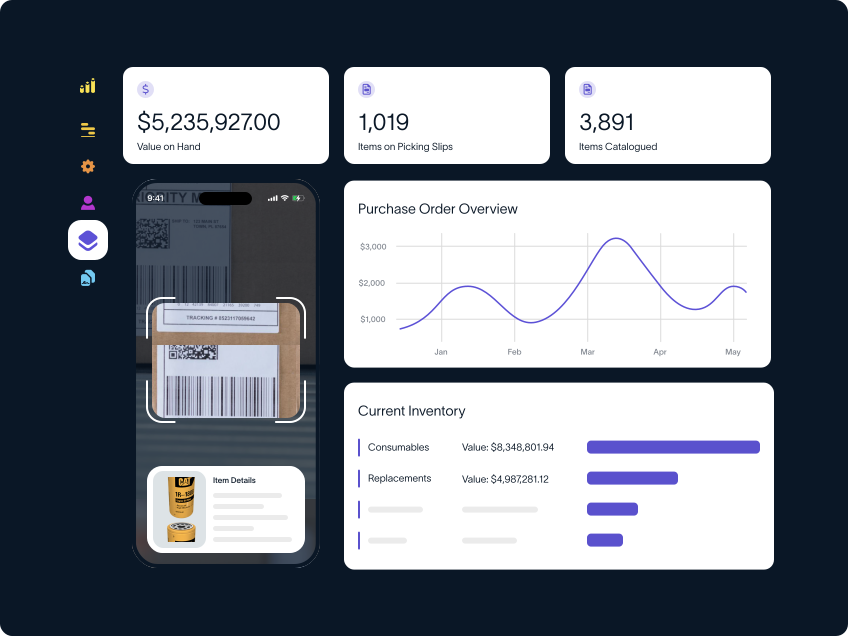
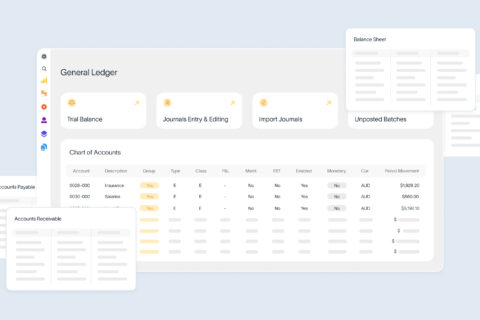
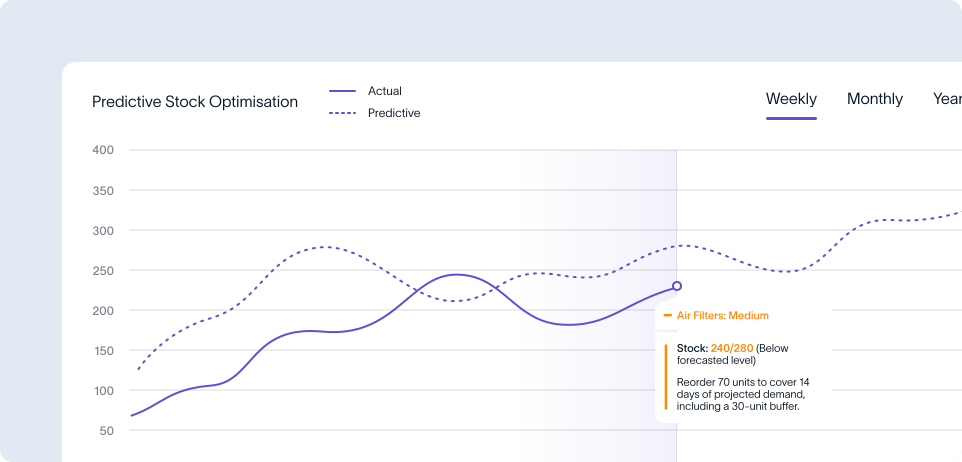
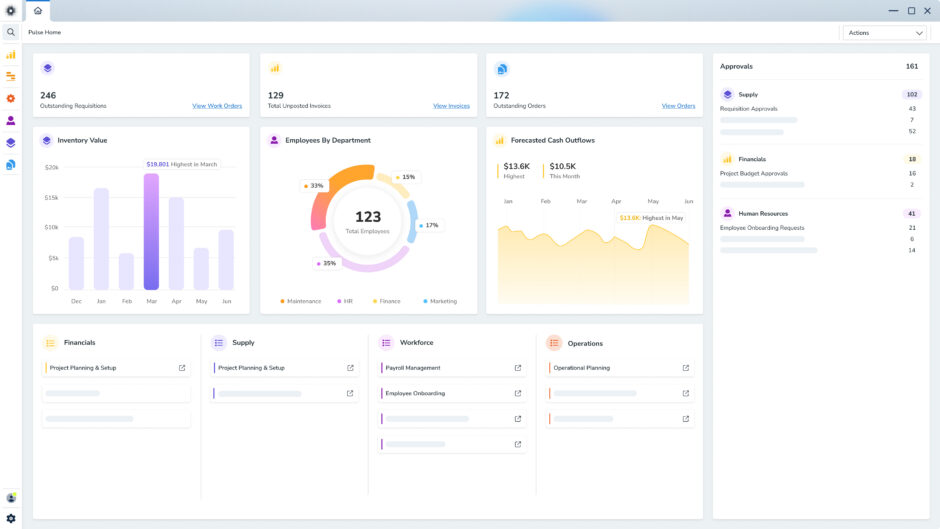
With advanced analytics, automated workflows and built-in predictive capabilities, this ERP module transforms financial data into actionable, real-time reports.
In turn, your teams can instantly access accurate information, explore trends and share insights. Speed up reporting, strengthen visibility and make confident decisions, business-wide.